The cold chain, a key element in food safety.
The cold chain is the set of necessary steps after the process of cooling or freezing food so that it reaches the consumer safely. It includes a whole set of elements and activities necessary to guarantee the quality and safety of food, from its origin to its consumption.
It is very important to protect food by keeping it at the required temperature during transportation to avoid the multiplication of microorganisms that may affect the quality and safety of the food.
The loss of the optimum temperature of refrigeration or freezing in any of the stages impairs the safety and quality of the food.
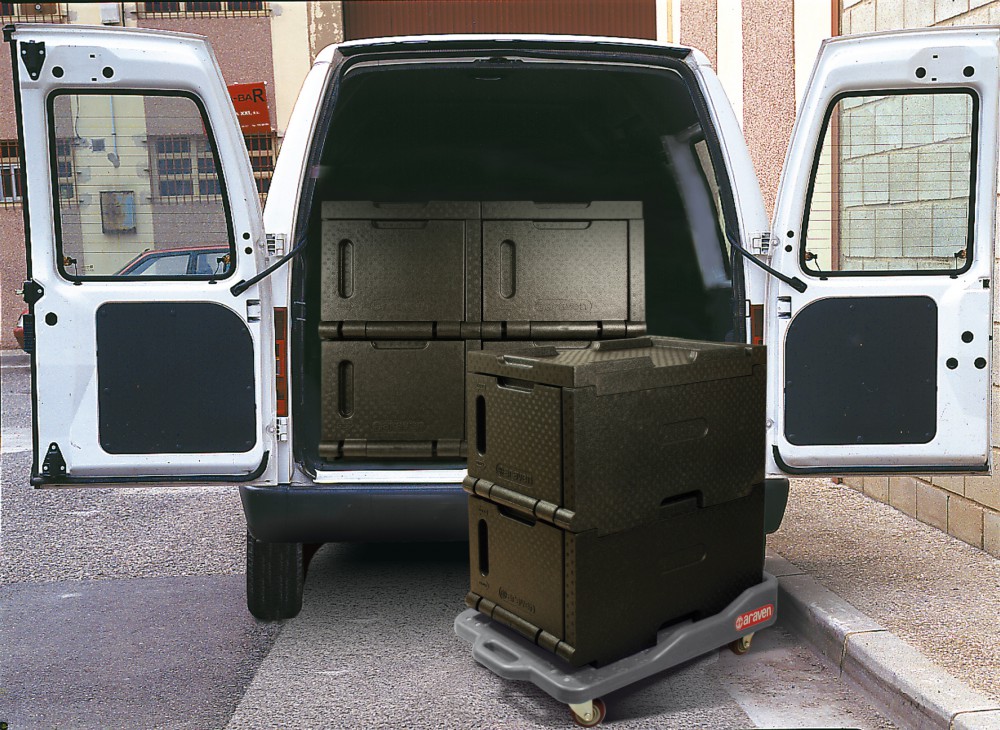
When the food needs to reach its destination at service temperature, (65º) heated transport can be carried out. In this case it will be key to keep the food with minimum temperature variations. Transport is carried out in vehicles which are prepared to maintain the temperature of the product with the minimum variation.
Transportation of perishable and pre-prepared foods.
The food companies involved in each stage of the food chain are responsible for taking all measures at their disposal so that food products comply with hygiene standards, and verify that this happens at all times. All appropriate sanitary conditions must be guaranteed throughout the entire production line, from primary production, processing, distribution, transport, storage and sale to the final consumer.
In the specific case of the transport phase, the Agreement on international transport of perishable goods and on special vehicles used for this transport was created; This agreement, which is known by the initials ATP, was initially created for international transportation and subsequently applied to the internal transport of the different signatory countries; specifically in Spain through Royal Decree 1202/2005 this agreement is also applicable to transport taking place within the national territory.
Therefore, the aim of the ATP agreement is to ensure that perishable goods are transported internationally in order to guarantee, during transport, the conditions that these products must meet for their consumption, ensuring that the vehicles carrying out this transport comply with the technical conditions contained in the agreement.
Araven solutions
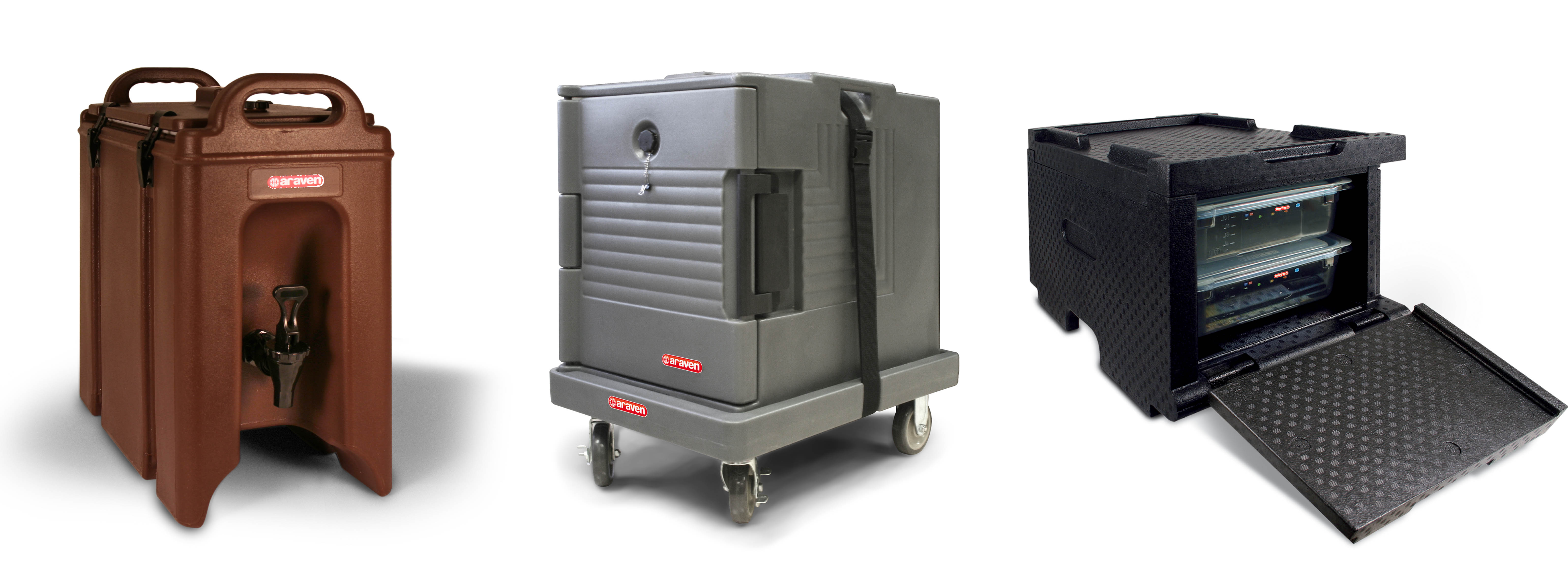
GastroNorm insulated containers
Ideal for transporting pre-processed or processed food, ensuring the maintenance of optimum temperature conditions during transport, with absolute control of the cold and heat chain. It has interior guides and space for Gastronorm containers.
Hot storage: every hour the temperature drops 2ºC
Cold storage: every hour the temperature increases 0.5ºC
It has a steam valve which allows steam to escape preventing condensation.
Hot storage: every hour the temperature drops by 1ºC
Cold storage: every hour the temperature increases by 1ºC
Insulated liquid dispenser
Ideal for the transportation and maintenance of hot and cold drinks for hours. Araven insulated liquid dispenser with integrated handles to aid transport, are stackable and have 4 side fasteners. Drip dispenser tap, non-drip with two positions: continuous flow and adjustable flow rate.