Freezing and defrosting food that are common practices in many restaurant kitchens, are very important processes for which certain basic hygiene recommendations must be followed to eliminate any risk to customers’ health.
The first recommendation is that food to be thawed should be separated from the rest of the fresh foodstuffs to avoid any possible cross contamination and that food will thaw more quickly if it is taken out of its packaging or original container..
Use of drain trays or perforated containers
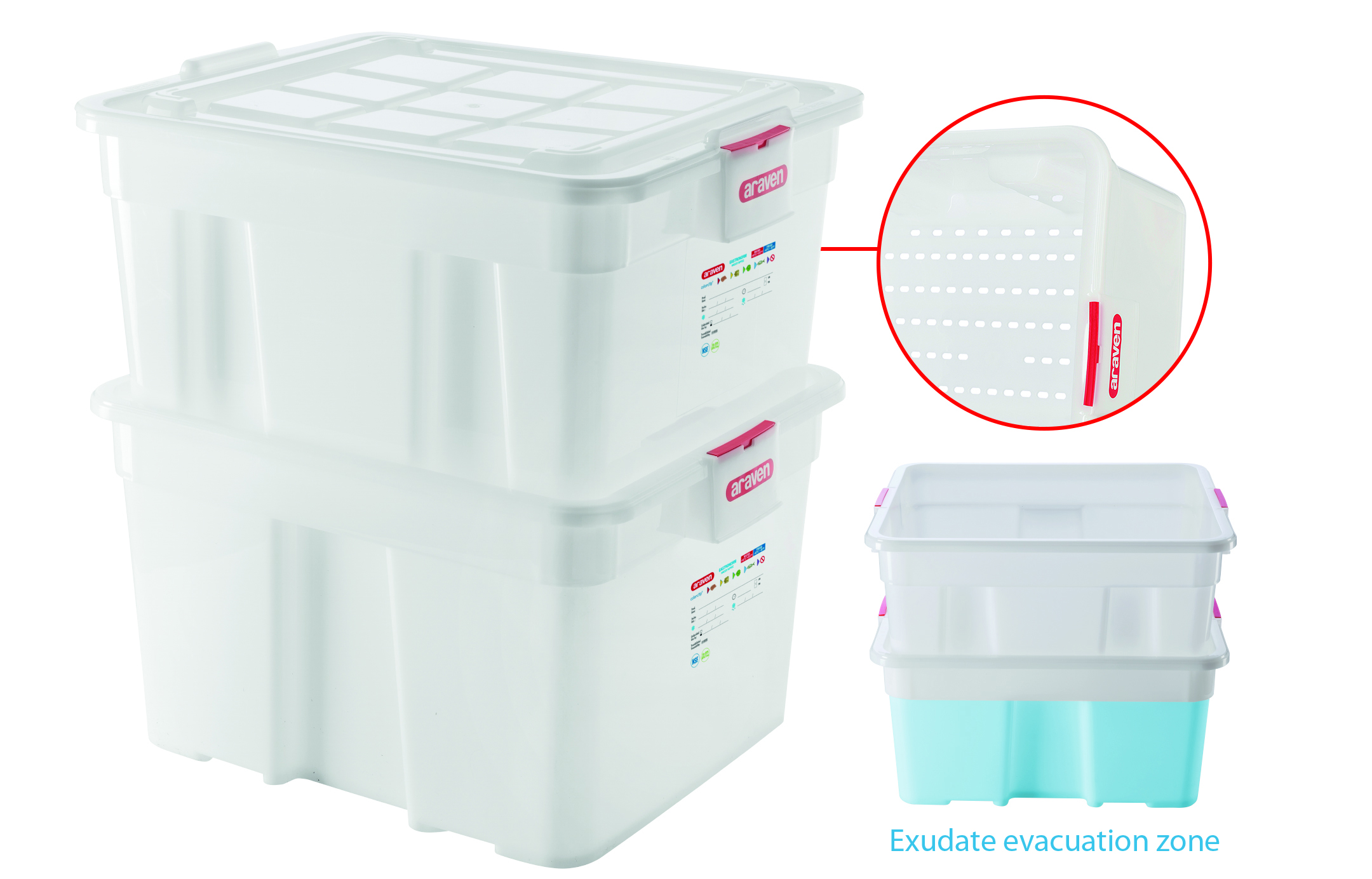
Araven recommends thawing food inside a rigid plastic container to avoid dripping and contamination of other nearby foods. We also recommend using drain trays or perforated containers during thawing to ensure maximum hygiene and preservation of fish and meat, to prevent exudates from coming into contact with the product and to reduce the risk of bacterial growth as well as to ensure that the food maintains all of its organoleptic properties (taste, smell etc.).
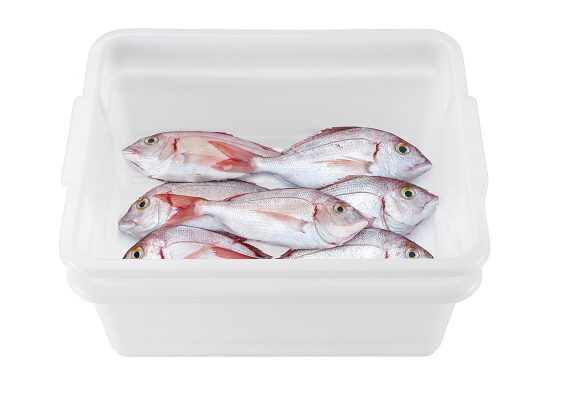
Products designed for food safety
Each container and its different pieces have been carefully designed with food safety in mind. For instance, the perforated base is ridged rather than flat so that there is the smallest possible surface area in contact with the foodstuff.
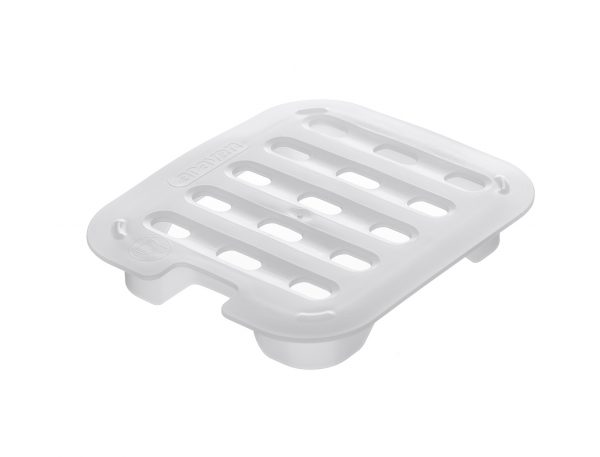
This also encourages quicker thawing and means that the liquid released drains to the bottom through the holes and keeps it separate from the food. The lid is also essential in preventing food contamination.
In the food service industry it is important for these containers to be easy to clean and therefore they are designed with rounded edges and no recesses where liquids can accumulate.
Solutions to suit the volume of raw materials you need to thaw
Size is another aspect to be taken into account and Araven offers solutions that adapt to the needs of all types of establishments and the volumes of raw materials they work with. We recommend choosing the defrost kit that best adapts to the size of the batch delivered by the supplier so that the whole of the product batch can be thawed or stored in one single container.
All of the items are manufactured in polyethylene, one of the best materials for thawing processes due to its good impact strength, high resistance to corrosion, good thawing performance (it withstands temperatures up to -40ºC) and it prevents moisture from passing.
- For small volumes (1 litre to 12.5 litre capacities) we recommend using GastroNorm drain trays that are compatible with the different sizes of GastroNorm food containers made by Araven
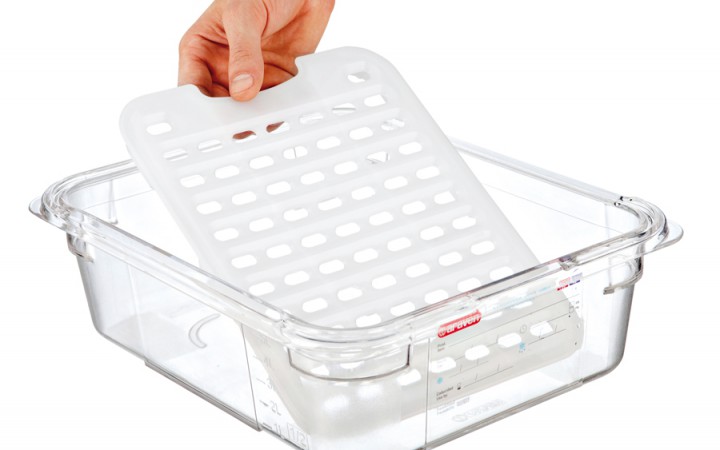
- For 12 litre to 35 litre capacities there is the 17 litre or 35 litre 3-piece defrost kit that comprises: a closed container, a perforated container to place the product to be thawed on and a lid.
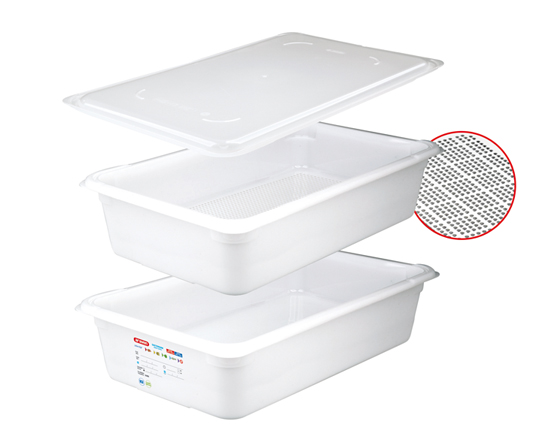
- For 35 litre to 90 litre capacities the best solution is Gastronorm 2/1 containers either 300 mm. or 400 mm. high, combined with their perforated version and lid. These containers are designed for thawing large batches of raw materials.

We hope that these recommendations help food service professionals to put into practice thawing processes that are quicker, safer and more hygienic.