Scrambled, boiled, fried, in omelets, grilled, hard-boiled, poached, soft-boiled, smashed, baked, stuffed… eggs are a fundamental ingredient in kitchens all over the world.
That’s why proper storage is essential to ensure food safety and maintain their quality. Poor storage can encourage the growth of bacteria such as Salmonella, especially in hospitality environments.
In fact, Salmonella poisoning is the main food safety risk associated with dishes made from eggs. Fresh eggs have been a source of salmonellosis transmission, both from the egg itself and from the cardboard packaging in which they are sold. Below, we explain how to handle and store eggs safely.
The ideal place: inside or outside the fridge?
Let’s start by debunking a common myth: eggs should never be stored at room temperature. In fact, the recommended storage temperature is always between 1°C and 4°C (34°F–39°F). So, how long do eggs last in the fridge? They can typically be kept for around one month from the date of receipt, or according to their best-before date.
To store eggs properly, they should be placed in a refrigerated unit with humidity levels below 80%. It is essential that air circulates freely around the eggs to prevent mold formation.
If you have separate refrigeration units for different types of food, it is advisable to store eggs in the vegetable compartment.
What about at home or in smaller establishments? Do not place eggs in the fridge door, as this is the area most affected by temperature fluctuations.
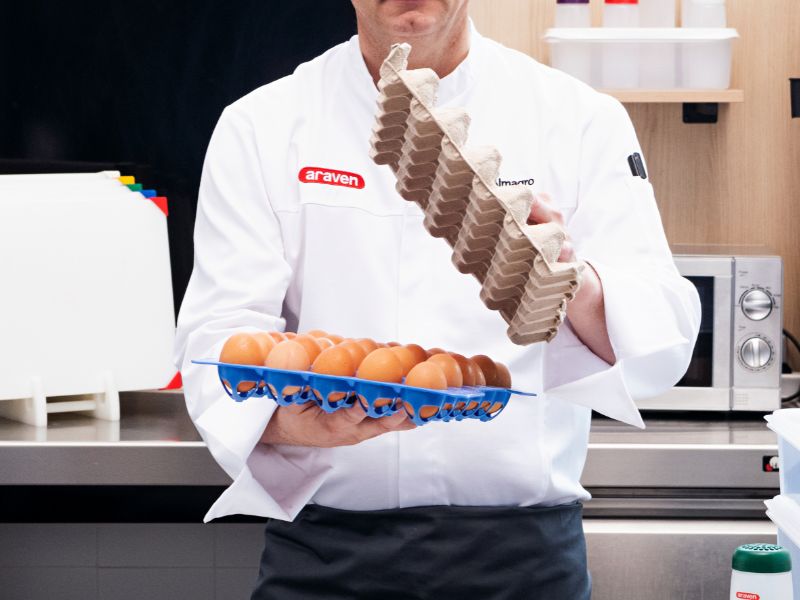
At Araven, we are at the forefront of professional equipment for the hospitality sector. Discover our full range of egg box, a BPA-free alternative to original packaging.
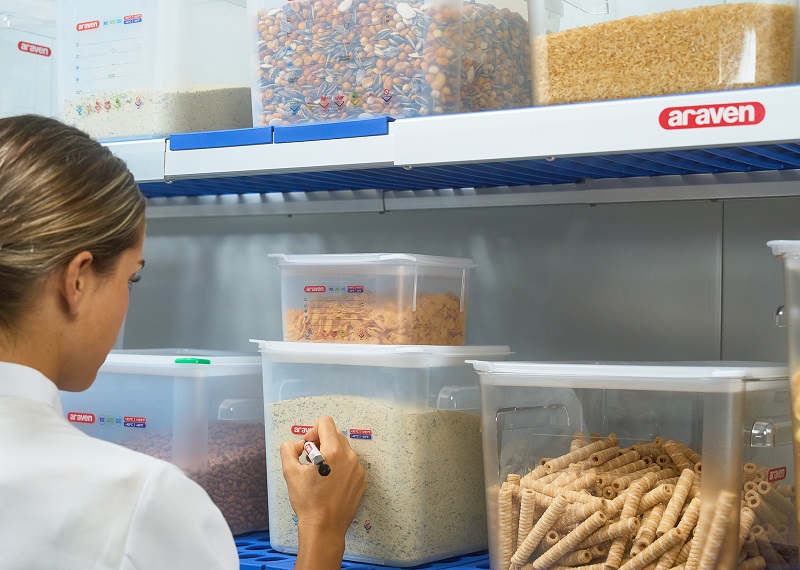
When it comes to storing cooked eggs, keep in mind that they lose their natural protective barrier (the shell), making them even more vulnerable to contamination. Therefore, they should be stored in clean, sealed, airtight containers, kept refrigerated and separated from raw foods. That is why it is recommended to use Gastronorm airtight containers.
Also remember that cooked eggs have a much shorter shelf life:
- With shell: up to 1 week
- Peeled: up to 3 days
Did you know that operators in collective catering, pastry, baking workshops, prepared food production, and similar industries may only use fresh eggs (Category A) if they ensure cooking temperatures above 75°C (167°F)? For any dish prepared at lower temperatures, eggs must be replaced with pasteurized egg products produced by authorized companies.
professional kitchen
Discover Araven products to preserve, transport and organise better in professional kitchens.
How to store boiled eggs
When storing cooked eggs, keep in mind that they lose their natural protective barrier (the shell), making them more vulnerable to contamination. Therefore, they should be stored in clean, airtight containers, refrigerated and kept separate from raw foods.
Also note that their shelf life is shorter:
- With shell: up to 1 week
- Peeled: up to 3 days
Did you know that in catering, pastry, and food production industries, only fresh eggs (Category A) can be used if cooking temperatures exceed 75°C (167°F)? For lower temperatures, eggs must be replaced with pasteurized egg products from authorized suppliers.
Hygiene tip: say goodbye to cardboard packaging
One key factor in egg storage is replacing the original packaging with clean, sanitized containers such as reusable egg trays.
Salmonella often spreads through packaging rather than the egg itself. Cardboard packaging, in particular, has historically been a source of contamination, making this step essential.
Recommendations when receiving eggs in a hospitality business
When receiving eggs from suppliers:
- Perform a visual inspection to ensure shells are not cracked or dirty
- Transfer eggs from cardboard boxes to reusable plastic trays (like Araven’s)
- Avoid cardboard, as it is porous and not permitted in refrigeration environments
- Containers should be hygienic and protect eggs from impacts.
Next:
- Label the eggs with batch origin and expiration dates
- Transport them to the kitchen for use
- After use, clean the trays (Araven products are dishwasher-safe)
- Return them clean to storage, ready for reuse
Check the date and don’t wash eggs
Always check expiration dates—not only for eggs but for all food products. In hospitality, the FIFO system (First In, First Out) is commonly used to reduce waste and ensure proper rotation.
Should you wash eggs before storing them? No—never.
Eggshells have a natural protective coating. Washing them removes this barrier, making it easier for bacteria to enter.
If an egg is dirty, clean it just before use, never before storage.
Additional tips for storing eggs
Here are some extra tips you may not know:
- Store eggs pointed side down to keep the yolk centered
- Never freeze eggs in their shell. If needed, freeze them beaten and without shell
- Keep eggs away from strong-smelling foods, as shells are porous
- Avoid temperature fluctuations, as they reduce shelf life and promote condensation and bacterial growth
- Maintain strict hygiene in food handling areas
As you know, properly storing eggs and other foods not only extends their shelf life but is essential for protecting people’s health.
At Araven, we offer a wide range of food storage solutions designed to meet hygiene and food preservation standards, prevent spoilage, and avoid cross-contamination.