Did you know that 40% of the plastic consumed in the European Union comes from packaging? In response to this situation, the EU has decided to focus on the circular economy, thereby reducing single-use plastics.
And how does this measure affect the hospitality sector? Through the ban on single-serving packaging. Single-serving packs of sugar, ketchup, mayonnaise, butter, olive oil, and other products will have to be replaced by dispensers, refillable bottles, or collective containers.
Indeed, from 12 August 2026, bars, restaurants, and other HoReCa establishments throughout the EU will no longer be allowed to use these single-serving single-use plastic packages.
Below, we explain exactly what this measure involves and provide all the information you need to manage your hospitality business. Turn this obligation into an opportunity!
What Are Single-Serving Packages and Why Is the EU Banning Them?
Single-serving portions of milk, mustard, salt, or jam are just a few examples of products commonly found in this individual format.
Single-serving packs are very popular in the hospitality sector, as these individual single-use formats are designed for one portion, making them convenient and hygienic. In fact, they became especially prominent during the pandemic.
However, the reality is that, despite their benefits, this type of packaging generates a large amount of plastic waste that is difficult to recycle and reuse. That is why the EU has introduced this new European regulation: a regulation designed not only to improve recycling, but also to prevent waste from being generated in the first place by prioritising reusable and refillable systems.
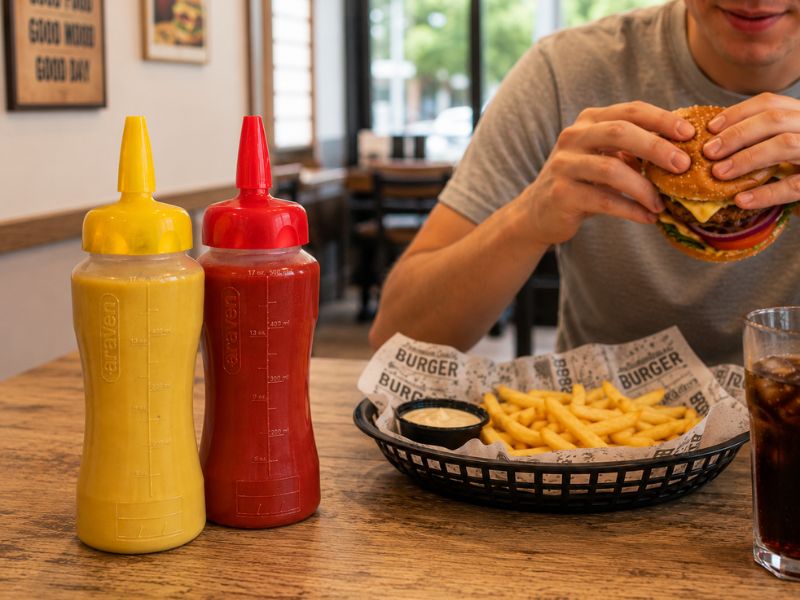
At Araven, we are always committed to driving innovation and sustainability in professional kitchens. We design versatile, easy-to-use products that are adapted to legislation. One example is our collection of squeeze sauce dispensers: ergonomic, easy to refill, durable, and dishwasher-safe.
What the New European Regulation Says: Regulation (EU) 2025/40 – PPWR
Approved on 19 December 2024 and published on 22 January 2025 in the Official Journal of the European Union, Regulation (EU) 2025/40 on packaging and packaging waste entered into force on 11 February 2025. Since then, there has been an 18-month transition period, which will end on 12 August 2026. On that day, much of the previous Directive 94/62/EC will be repealed.
It should be noted that, as this is a regulation, the measure applies directly and uniformly across all 27 EU Member States, without the need for subsequent national legislation.
professional kitchen
Discover Araven products to preserve, transport and organise better in professional kitchens.
“From 1 January 2030, economic operators shall not place on the market packaging in the formats and for the uses listed in Annex V.” Article 25.1.
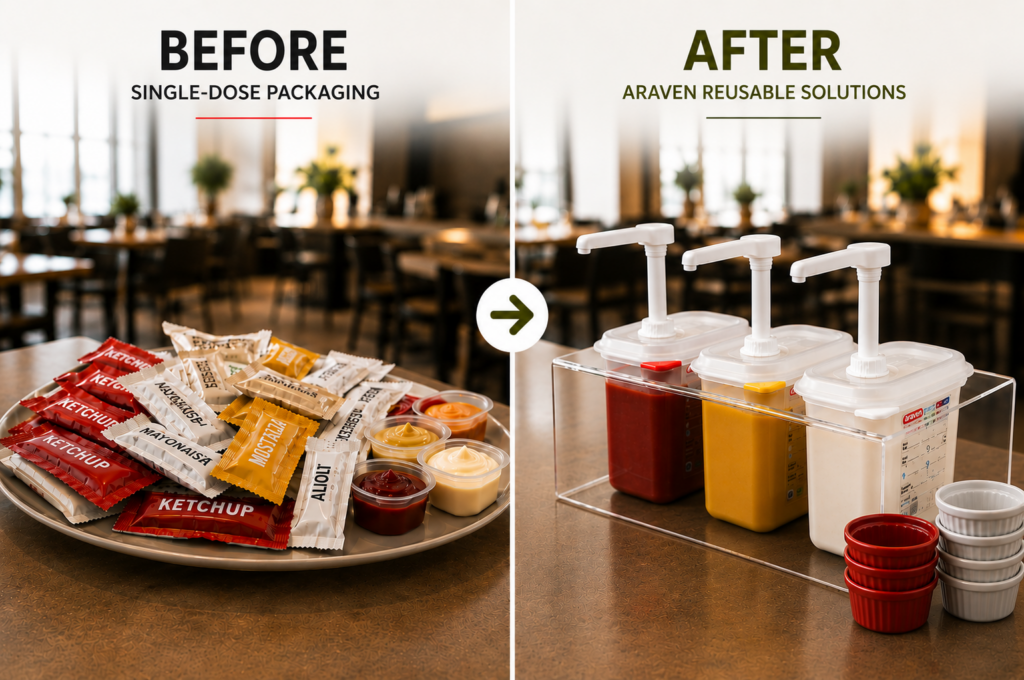
What Will Be Banned from 12 August 2026: Sauces, Sugar, Milk, and Condiments
Next August will mark the end of single-use plastic packaging for sauces, condiments, sugar, or milk. Common formats that will no longer be permitted include:
- Sugar, salt, or pepper sachets.
- Sauce sachets, such as mustard, ketchup, mayonnaise, etc.
- Milk capsules for coffee.
- Individual tubs of butter, honey, or jam.
- Single-use packaging for oil and vinegar.
On the other hand, it is important to point out that this rule on single-serving packaging does not affect domestic consumption, only the hospitality sector. These products will continue to be sold in supermarkets as they are today.
The Only Two Exceptions: Takeaway Food and Healthcare Facilities
However, this European Union Regulation 2025/40 includes two exceptions for the use of single-serving packaging. They are as follows:
- Takeaway and delivery food. Single-serving packs in the hospitality sector may only be provided in this scenario: when the food is to be consumed outside the premises. The reason is clear: hygiene and preservation. However, the packaging must be recyclable.
- Healthcare and care facilities. In other words: hospitals, health centres, or nursing homes. In these cases, single-serving packs for coffee and other food products will still be allowed, as these are spaces where safety and hygiene are prioritised when serving food.
Upcoming Key Dates: 2030 and Review in 2032
August 2026 is the first step in this regulation on the ban of single-serving sachets in the EU. However, there are two more important dates on the calendar:
- January 2030. In addition to single-serving food packaging, the ban will extend these single-use plastics to other sectors, such as cosmetics.
- February 2032. The European Commission will carry out an environmental and health impact assessment of the measures to verify whether the reduction in waste matches expectations. It will also proceed to adjust, expand, or clarify the restrictions based on the data collected.
How the Change Affects Bars, Cafés, and Restaurants
How does the ban on single-serving packs affect the hospitality sector? Bars, cafés, and restaurants will have to redesign their daily operations, both in the kitchen and in the dining area:
- Mise en place and back office. Containers will need to be refilled, cleaned, and replenished daily, adding items to be washed and creating new preparation tasks before and after service.
- Food safety. The inability to use single-use packaging means establishments will need to maintain much stricter control. They will have to avoid cross-contamination, maintain the cold chain, and reinforce allergen management.
- Consumption and cost control. While single-serving packs make it possible to limit the amount of product per person, consumption may increase significantly with dispensers.
- Customer experience. Finally, this change will need to be communicated to diners. Provide information transparently and use this change as a message of responsible branding.
Reusable Alternatives to Comply with the Regulation Without Losing Hygiene
How can single-use packaging be replaced with sustainable solutions? Below, we look at reusable alternatives for complying with this new European regulation. We also remind you that at Araven, we are at the forefront in this area and offer various options. For example, our entire line of sauce dispensers. Discover them in our online catalogue!
Dispensers for Sauces and Condiments
There are several options for replacing single-serving packaging in the hospitality sector:
- Lever-operated dispensers, for ketchup, for example.
- Squeeze bottles and refillable bottles, for use both in the kitchen and at the table.
- Drip-free refillable oil and vinegar cruets.
- Shared sugar bowls, salt shakers, and sweetener dispensers.
- Milk jugs and dispensers.
- Shared jars for jams or honey.
Food Storage and Handling Solutions in the Kitchen
It is also essential that these new measures continue to respect food safety. To achieve this, some recommended best practices include:
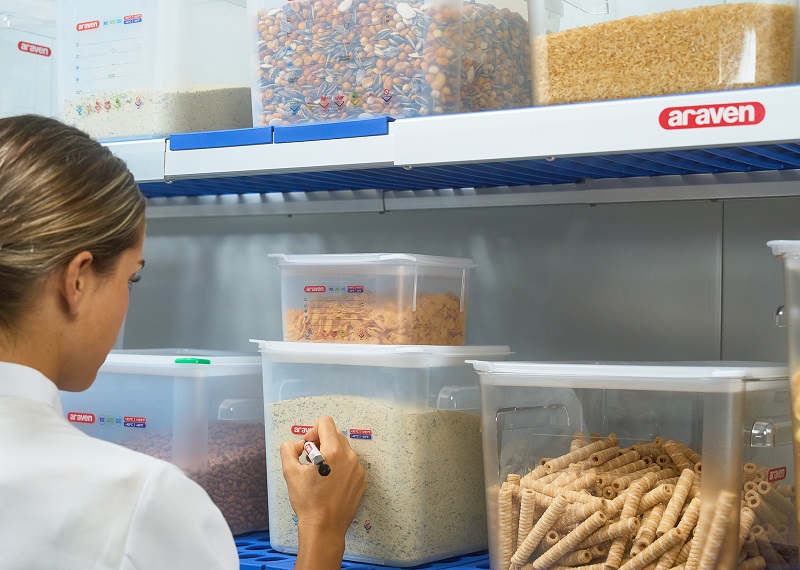
- Hygienic refilling. These containers should never be refilled on top of the previous product. To avoid mixing batches and contaminating the product, containers should always be refilled only after they have been cleaned and disinfected.
- Scheduled cleaning and disinfection. In addition to refilling products into other containers, it is essential to carry out this task on dispensers, nozzles, lids, and other utensils at the frequency established by the HACCP system.
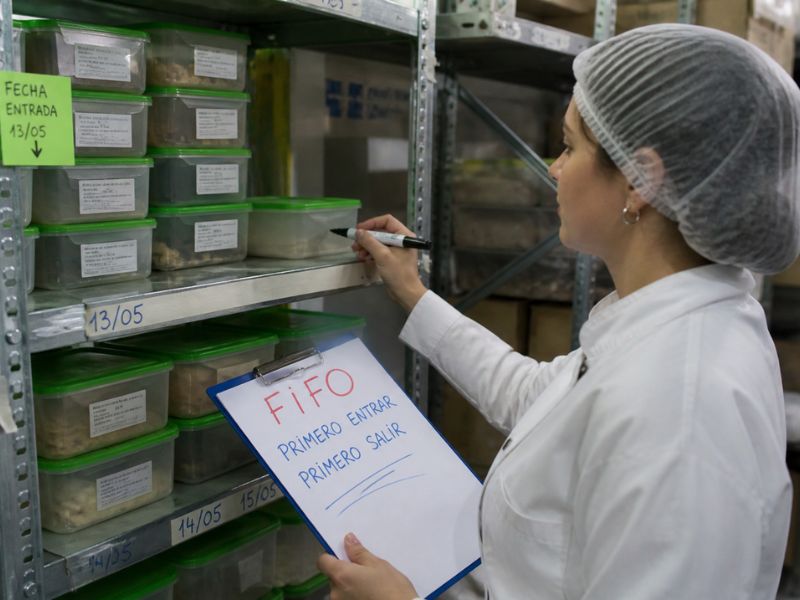
- Labelling and traceability. This consists of dating each container when it is refilled, as well as applying the FIFO rotation method.
- Cold chain. It is essential to keep products such as milk or mayonnaise refrigerated, while also respecting the time limits for being kept out of refrigeration during service.
- Staff training. Finally, it is essential to train staff in the new protocols for replenishment, cleaning, and allergen control.
How Araven Helps You Adapt Your Kitchen
Discover all our sauce dispensers and dosing bottles now, ideal for your hospitality business. Both products comply with EU regulations and are the perfect alternative to single-use packaging. Available in different sizes and colours, airtight, translucent, easy to use, and dishwasher-safe.
At Araven, we help you adapt your kitchen to today’s demands. Like us, choose innovation, efficiency, and sustainability!