A cutting board is an essential tool in every kitchen. This is especially true in the food service industry, where boards must be of very high quality. Additionally, in the sector, it is important to adhere to strict food handling standards. In this article, we will explore the various types of cutting boards, focusing on their materials and colors, to help you select the perfect one for your culinary needs.
Types of Cutting Boards
They are various types of cutting boards available on the market. Material, size, and even color are some factors to consider in their classification.
However, it is essential to remember how crucial it is to properly care for and clean cutting boards, especially before using them to cut raw food.
Wooden Cutting Boards
Although widely used in home kitchens, wood is not recommended in professional kitchens. In fact, its use is prohibited. According to European Regulation nº1935/2004, surfaces in contact with food must be washable, disinfectable, resistant to corrosion, and must not release harmful or potentially infectious substances into food.
Wooding cutting boards, being highly porous, can easily become breeding grounds for bacteria, as food remnants can remain trapped even after washing. Therefore, it is advised to avoid using wood and other materials that do not allow for deep cleaning and disinfection.
Polyethylene or Plastic Cutting Boards
Nowadays, plastic or polyethylene cutting boards are the most in-demand choice. This is understandable when you consider the advantages they offer. First, they are hygienic, safe, non-porous, light-weight, and dishwasher-safe. Additionally, they are economical, durable, and do not affect the sharpness of the knives.
Polyethylene also allows for the creation of cutting boards in different colors and sizes (such as 60x40x34 and 50x30x34).
Without a doubt, a cutting board made of polyethylene is the most recommended option. At Araven, we offer BPA-free cutting boards made from high-density polyethylene, which are shock-resistant and ideal for low temperatures.
Marble Cutting Boards
Other materials for kitchen cutting boards are available on the market, such as marble. These have become more decorative than functional in the kitchen. Marble is typically used for chopping rather than for preparing food. This material is not recommended in professional kitchens, as it can dull the edges of knives.
Classification of Cutting Boards by Color
Did you know that the colors of a cutting board go beyond aesthetics? First, it is important to note that the surface of a cutting board is usually white. Indeed, white is the color of hygiene, as it makes dirt easy to spot, promoting better cleaning— something that wouldn’t happen with a darker color.
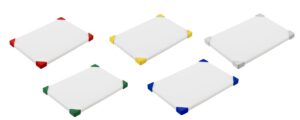
However, in professional kitchens, cutting boards are classified by color to identify the type of food being cut on each board. This helps prevent the mixing of smells and flavors, and reduces the risks of foodborne illnesses, and cross-contamination.
Having colored cutting boards is a matter of hygiene and food safety. At Araven, we offer a range of non-slip cutting boards in various colors, made from smooth, non-absorbent, and non-toxic materials. They also feature injected rubber corners that provide stability, ensuring the board stays in place during use. Plus, we offer various sizes!
Safety and hygiene are fundamental principles in any professional kitchens, which is why this color classification is essential. Below are the colors of cutting boards used in professional kitchens:
- Yellow Cutting Boards: Used for white meat such as poultry (chicken, turkey, etc.) or rabbit, among others.
- Red Cutting Boards: Designed for cutting meat, specifically red meats like beef or game.
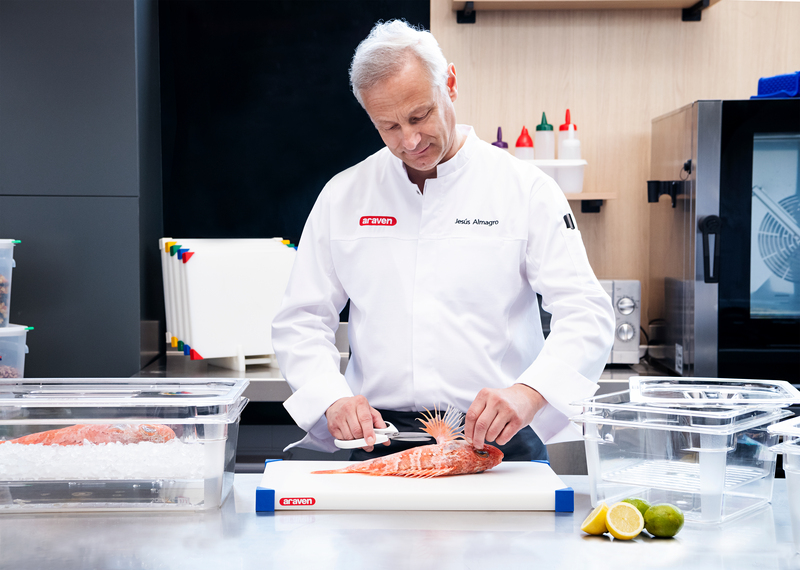
- Blue Cutting Boards: The boards are specifically for fish and seafood.
- White Cutting Boards: Used for dairy products such as cheese, pastries, bread, etc.
- Brown Cutting Boards: For cutting cooked meats, cold cuts and sausages.
- Green Cutting Boards: Used for cutting vegetables and fruits.
- Purple Cutting Boards: These colored boards are designed to prevent allergies and intolerances. They are known as “free-from” boards. For example, they can be used to avoid gluten contamination for people with celiac disease.
Are you in the hospitality industry? Do you plan to open your business soon? Order your cutting boards in different colors and sized from Araven. We are experts in kitchen equipment and a leading brand in food safety. Contact us today!