Currently sauce dispensers, or more commonly known as baby bottles, are found by the dozen in all professional kitchens. We assume that they have always been used in kitchens, but this is not the case. It was in the nineties when Chef Ferrán Adriá first introduced them to his kitchen, inspired by the famous ketchup and mustard dispensers. From that moment they began to be used to dress salads or any other dish and have ended up becoming an essential tool to finish off dishes in a precise and clean way. These baby bottles allow us to dispense all kinds of dressings whether light or thick, oils, sauces, and reductions of sauces …
Professional sauce dispenser characteristics:
When choosing a good sauce dispenser, we should look for the following several points:
- The bottles are, above all, containers for preserving the sauce. If the bottle outlet can be capped, it will improve preservation of the sauce
- The opening of the dispenser must be wide enough to allow both filling and cleaning.
- The measurement scale must allow control in dispensing the sauce, as well as offer precision when in use.
- Non-drip The non-drip systems prevent clogging and accumulation of the remains of the sauce in the opening. In turn, the shut-off valve of this non-drip system serves as a lid to improve preservation of the sauce.
At Araven, we offer several types of sauce dispensers so that the chef can choose the most appropriate one best one for their preparation needs. All of them are made using polyethylene, a material that recovers its shape and can be used in the microwave and washed in the dishwasher.
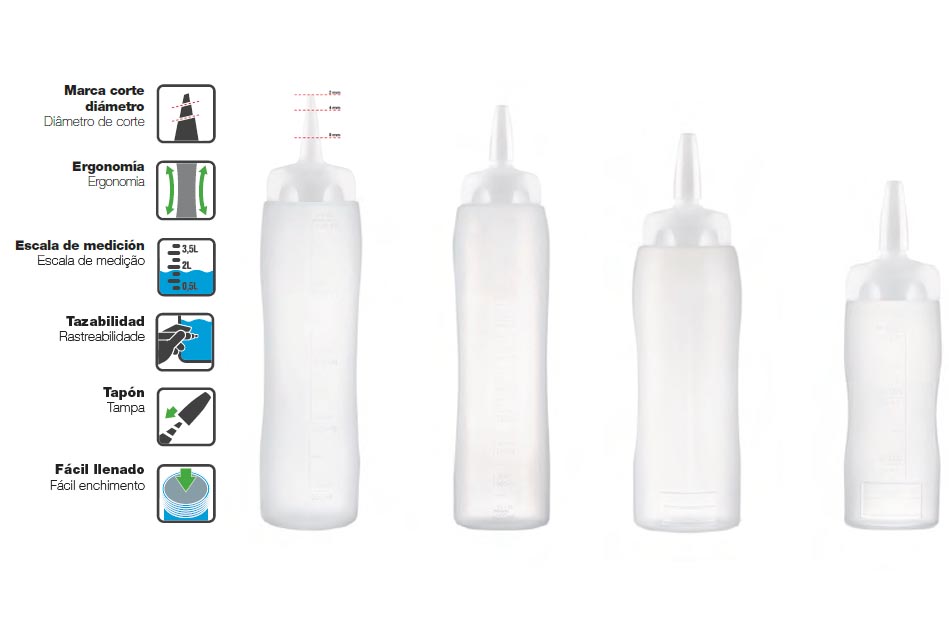
The range of Araven dispensers goes from the standard sauce dispenser, perfect to decorate dishes, and has the option to cut the opening with several diameters of 2, 4 and 8 mm to the non-drip sauce dispensers which are designed to dispense sauces in a cleaner way whilst controlling the amount of sauce dispensed. If you require further information about our sauce dispensers, please visit our website.