In both Spain and across Europe, regulations are clear: keeping a cold room clean and organized is not just a matter of hygiene, but also of food safety and operational efficiency. According to European Regulation 852/2004, it is stated that:
“Adequate facilities shall be provided, where necessary, for the cleaning, disinfection and storage of working equipment and utensils. These facilities shall be constructed of corrosion-resistant materials, be easy to clean and have an adequate supply of hot and cold water.”
Proper cleaning and organization help prevent contamination, extend product shelf life, and make daily operations more efficient. Below, we explain how to clean and organize a cold room effectively.
Deep cleaning protocol: frequency and approved products
How do you clean a cold room? In restaurants, cafés, or bars, a strict and regular protocol must be followed. A quick daily clean is not enough. Experts recommend:
- Surface cleaning: daily or after each service
- Deep cleaning: every two weeks if usage is low, or weekly in high-use environments
- Full disinfection: at least once a month
For a proper deep clean, the cold room must be completely emptied to access all surfaces. Shelving should be dismantled, and seals, drains, and corners thoroughly cleaned—areas where moisture and residues tend to accumulate.
It is also important to rinse with clean water and dry thoroughly to prevent ice formation and bacterial growth.
Regarding cleaning products, only those approved for food use should be used, such as neutral detergents and certified disinfectants. Avoid abrasive products like non-food-grade bleach or ammonia, as they can damage surfaces or leave toxic residues. Cleaning products must always be stored away from food.
professional kitchen
Discover Araven products to preserve, transport and organise better in professional kitchens.
Summary: steps to clean a cold room
- Planning (to protect food and avoid risks)
- Dry cleaning (removal of solid residues)
- Cleaning with detergent (grease and dirt removal)
- Rinsing (to remove chemical residues)
- Disinfection (to eliminate microorganisms)
- Drying (to prevent ice and bacteria)
- Inspection and restart
- HACCP record and control
Organizing by levels: preventing cross-contamination and dripping
In addition to cleaning, proper organization is essential. Organizing a cold room in hospitality is not a minor task—it is critical for food safety.
A well-organized cold room helps prevent cross-contamination, which occurs when food is contaminated by harmful substances, potentially causing foodborne illness.
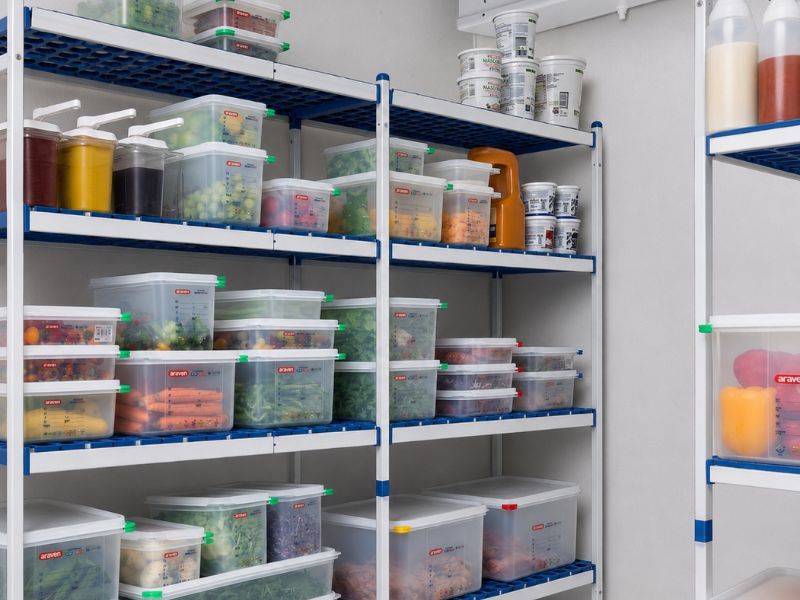
Recommended storage layout by levels:
- Top shelves: ready-to-eat foods (prepared dishes, desserts, cold cuts)
- Upper middle shelves: pre-prepared or processed foods (washed vegetables, salads)
- Lower middle shelves: dairy products, cheese, and eggs
- Bottom shelves: raw foods that may drip (meat, fish, seafood)
- These must be stored in airtight containers to prevent dripping
If you’re looking for high-quality airtight containers, Araven offers reliable solutions such as Gastronorm airtight containers, designed to prevent spills, protect food from humidity, and improve stock control.
Additional food safety practices:
- Separate foods by category: never mix different types of meat or raw seafood with prepared dishes
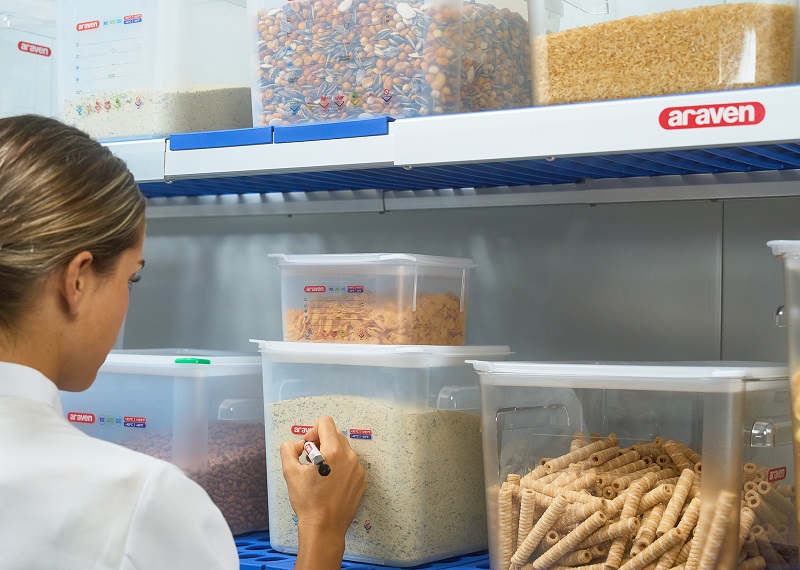
- Label products: include entry date, expiration date, and product name
- Maintain ventilation and temperature: avoid overloading shelves and keep temperature between 0°C and 4°C (32°F–39°F)
Organization and cleanliness are essential in any kitchen. To further prevent cross-contamination, Araven also offers color-coded cutting boards to separate food preparation tasks safely.
Stock management with airtight containers: the visual FIFO system
How should you manage stock in a cold room? Beyond cleaning and organization, inventory management is key.
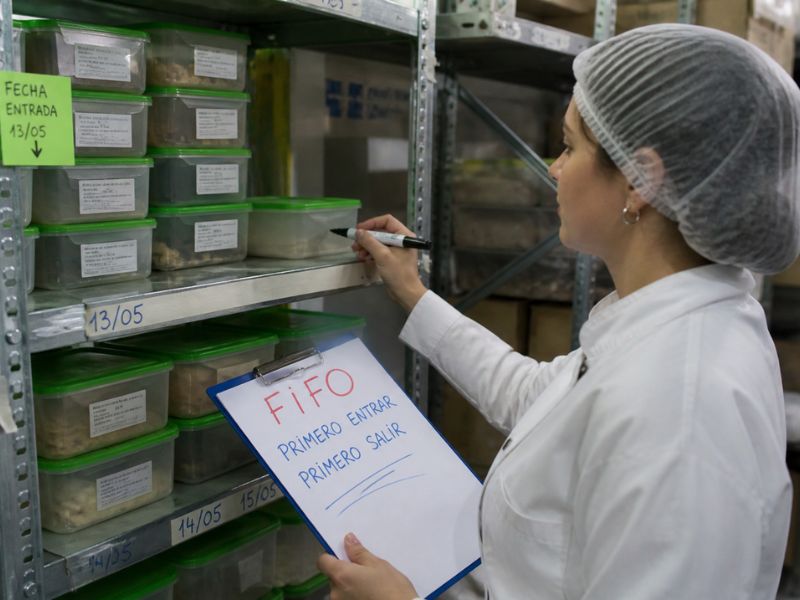
A widely used method in workstations in professional kitchens is the FIFO system (First In, First Out)—products that arrive first are used first. This reduces food waste, improves efficiency, and ensures better stock control.
At Araven, we offer solutions designed for this system, such as the FIFO Fast sauce dispenser, ideal for food trucks, takeaway, and delivery services.
Tips to implement FIFO:
- Use clear, visible labels
- Place older products at the front
- Assign specific zones for each type of food
- Use transparent or color-coded containers