Efficient restaurant stock management is key to ensuring food safety, reducing waste, and optimizing costs in any hospitality business. In this context, the FIFO system has become one of the most widely used methods for organizing storage rooms, cold chambers, and preparation areas.
What Is the FIFO System and When Should It Be Applied in Hospitality?
When asking what FIFO is, it refers to the acronym “First In, First Out.” This stock management method consists of using older products first to prevent them from remaining in storage longer than recommended.
In the hospitality industry, FIFO is highly effective and especially useful for storing many perishable foods. Thanks to the FIFO system, restaurants can reduce food waste, minimize losses, and lower risks related to food safety.
As a result, the FIFO system can be applied in cold rooms, freezers, preparation areas, and dry storage facilities. Inventory remains under control, making stock rotation easier.
At Araven, we have created the FIFO Fast sauce dispenser model — ideal for fast food businesses or takeaway services. Easy to clean, ergonomically designed, and equipped with a dispensing valve, this product helps ensure proper sauce rotation. Its wide opening allows easy refilling simply by removing the rear cap. Discover it in our online catalog!
FIFO Method Step by Step for Organizing Storage Rooms and Cold Chambers
Once you understand what the FIFO system is, it is important to know how to implement it correctly. To do so, a clear and efficient organization system must be established across all storage areas of your restaurant.
Here is a step-by-step guide to implementing the FIFO system in your storage areas:
Label Foods and Preparations
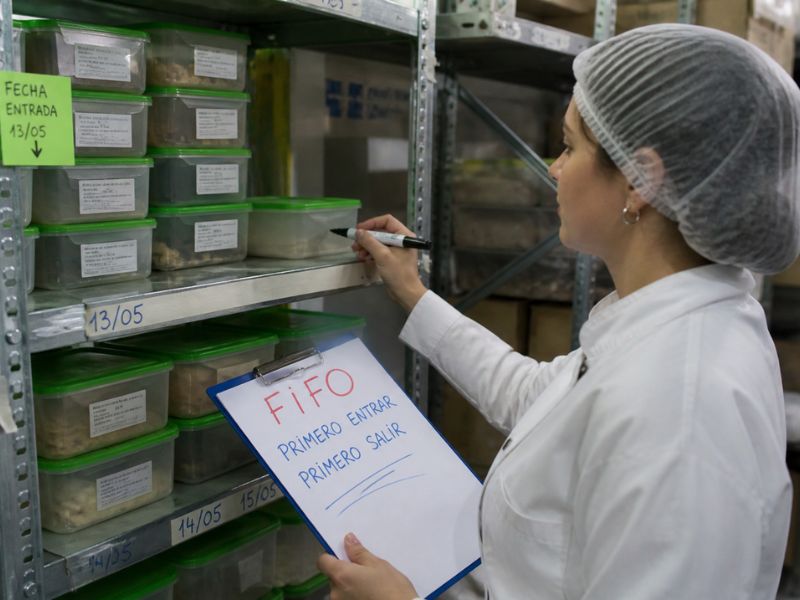
To apply the FIFO method, products must be labeled with the reception date, opening date, and expiration or best-before date.
Place Older Products at the Front
This is the core principle of the FIFO system: older products should be placed at the front, while newly arrived items go behind them. This ensures kitchen staff use foods with the nearest expiration dates first.
Organize Storage by Food Type
Whether applying FIFO in a storage room, cold chamber, freezer, or any other area, it is essential to divide foods according to their category: meat, fish, dairy products, vegetables, dry goods, etc.
Carry Out Regular Checks
To monitor stock rotation effectively, inventory must be reviewed constantly. This helps detect products nearing expiration or labeling mistakes, for example.
Train the Team
For the FIFO method to work efficiently in your restaurant, staff training is essential. It is the only way to ensure the system is applied correctly on a daily basis.
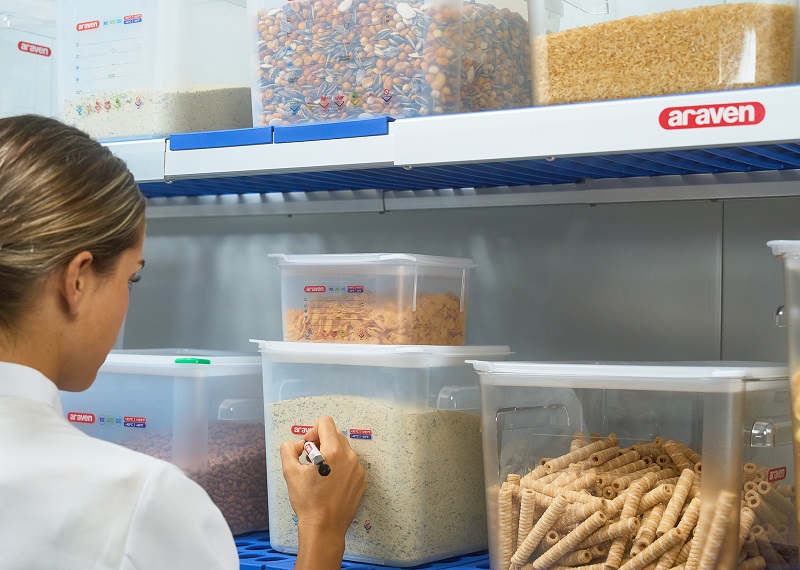
Looking for an efficient storage solution to implement the FIFO method in your business? Araven can help. In addition to our sauce dispensers, we offer accessible food containers designed specifically for FIFO systems. They preserve foods in very low humidity conditions, extending the shelf life of dry products such as pasta or legumes.
FIFO, FEFO, and LIFO: Differences in Food Management
Although FIFO is the most commonly used stock rotation method, there are other systems used in food storage. In addition to FIFO, let’s look at FEFO and LIFO:
FEFO (First Expired, First Out)
What is the difference between FIFO and FEFO? As we have seen, FIFO prioritizes products according to their arrival date in storage. FEFO, on the other hand, prioritizes products with the nearest expiration date, regardless of when they arrived.
In fact, FEFO stands for “First Expired, First Out.”
This method is especially useful for preventing waste of highly perishable foods such as fresh meat or fish.
LIFO (Last In, First Out)
And what is the difference between FIFO and LIFO? LIFO stands for “Last In, First Out.” In other words, the most recently stored products are used first.
For food management, however, this method is not recommended, as it increases the risk of expiration and food waste.
Therefore, if you want to avoid food waste, FIFO and FEFO are the safest and most effective methods for the hospitality industry. They guarantee proper inventory rotation.
Common Mistakes When Implementing FIFO and How to Avoid Them with Proper Stock Rotation
In addition to understanding what the FIFO system is, it is important to know how to apply it correctly. Here are the most common implementation mistakes so you can avoid them:
- Forgetting information on labels. Incorrect labeling makes stock rotation difficult and increases the risk of using spoiled food.
- Failing to train staff. Without proper training, there can be no effective FIFO system.
- Overloading storage rooms or cold chambers. Excess stock makes FIFO more difficult to manage. This method requires purchasing only the necessary quantities.
- Not checking expiration dates regularly. Relying solely on organization can lead to expired products and forgotten items.
Araven has been designing, manufacturing, and marketing products for the hospitality industry since 1976. Decades of experience support us, along with an international presence in more than 80 countries. Request your quote today!