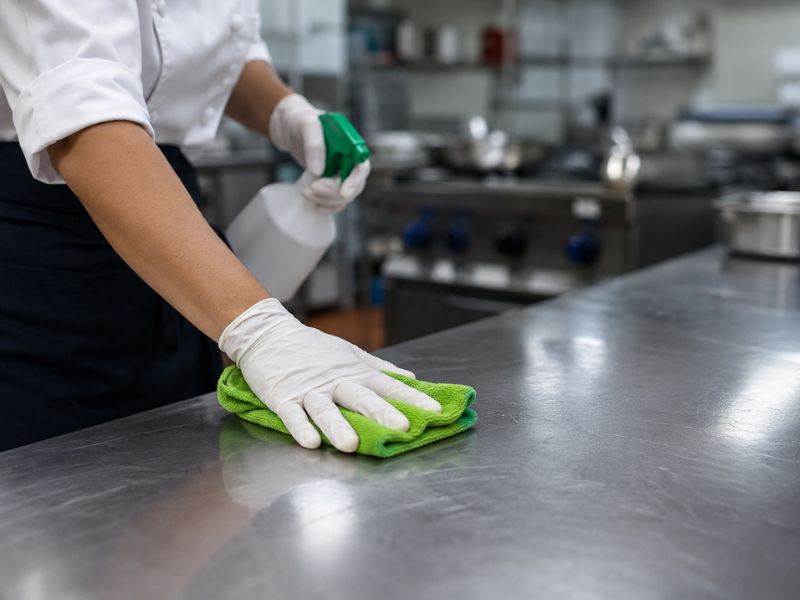
Hygiene and cleaning in a professional kitchen are not just matters of organization or image — they are essential for complying with current regulations and, consequently, for preserving food safety and HACCP compliance.
Specifically, cleaning and disinfection protocols in hospitality businesses are established based on the Hazard Analysis and Critical Control Points (HACCP) system.
Below, we review the key steps for implementing an effective cleaning and disinfection plan in your restaurant kitchen.
Why a Cleaning and Disinfection Plan Is a HACCP Prerequisite
A restaurant cleaning and disinfection plan is part of the HACCP prerequisite programs and one of the most basic elements required for a food safety system to function properly.
Without proper cleaning and disinfection, food safety is put at risk, in addition to non-compliance with legislation. In fact, current regulations require food establishments not only to clean and disinfect, but also to provide documentary proof that these tasks have been carried out.
To achieve this, it is essential to have cleaning and organizational accessories for hospitality businesses that meet HACCP requirements and help preserve food safety. At Araven, we offer different models of cleaning and disinfection buckets and accessories that are not only practical, but also essential elements in any professional kitchen. Discover them now!
professional kitchen
Discover Araven products to preserve, transport and organise better in professional kitchens.
Cleaning vs. Disinfection: They Are Not the Same (And Why It Matters)
If we want to prevent bacteria such as Salmonella, E. coli, or Listeria from appearing in the kitchen, it is essential to clearly understand the difference between cleaning and disinfection. Although these terms are often used interchangeably, they refer to different processes:
- Cleaning: Consists of removing visible dirt, grease, organic matter, and residues using detergents and mechanical action. Without this prior step, disinfection loses effectiveness.
- Disinfection: This process aims to reduce or eliminate pathogenic microorganisms using authorized chemical products or thermal methods.
For this reason, a complete cleaning and disinfection plan for a restaurant kitchen must include both processes. And if you still have questions about the subject, we invite you to read this article on the correct cleaning of airtight containers.
The 7 Critical Areas in a Professional Kitchen and Their Cleaning Frequency
From cold storage rooms to waste containers, including extractor hoods, there are critical areas that require stricter control to prevent health risks such as cross-contamination or even pest infestations.
Discover the 7 critical areas in a professional kitchen and their recommended cleaning frequency:
Work Surfaces and Griddles
First of all, it is important to remember that safe handling of meat, fish, and other foods requires proper sanitation of work surfaces and griddles. This must be carried out continuously: before starting operations, during service, after each shift, and whenever there is a risk of contamination.
Countertops, preparation tables, and cutting boards are in direct contact with food, which is why their cleaning and disinfection must be continuous throughout service.
As for griddles and grills, carbonized grease must be removed regularly to prevent chemical contamination and residue build-up.
Floors, Walls, and Ceilings
In addition to work areas, cleaning a restaurant kitchen must include the sanitation of floors, walls, and ceilings. Floors, for example, accumulate dirt and organic residues which, without a proper cleaning and disinfection plan, can become major sources of microorganisms.
The same applies to walls, where attention should be paid not only to dirt and grease, but also to humidity, broken tiles, or peeling paint.
Cleaning should therefore be carried out after every working day and whenever a major incident occurs, such as a spill.
Extraction Hoods and Ventilation Systems
Where does grease accumulate most? In extractor hoods and ventilation filters. This is a critical area because proper cleaning protects both food safety and the safety of the premises itself. In fact, grease accumulation in hoods and filters is one of the main fire hazards in the hospitality industry.
For this reason, in addition to daily surface cleaning, regular deep degreasing of the extraction system is essential.
Cold Rooms and Freezers
Besides knowing how to organize a cold storage room or freezer, it is important to keep them clean and free from excessive frost. This not only prevents cross-contamination, but also helps maintain the cold chain and proper storage temperatures.
Utensils, Cutting Boards, and Tableware
The cleaning and disinfection of kitchen utensils is equally important. These tools are among the main sources of cross-contamination.
A professional kitchen therefore needs not only color-coded cutting boards, but also regular checks to ensure they are in good condition and free from deep cracks.
For industrial dishwashers, it is also important to monitor temperatures and equipment maintenance.
Storage Areas and Waste Disposal Zones
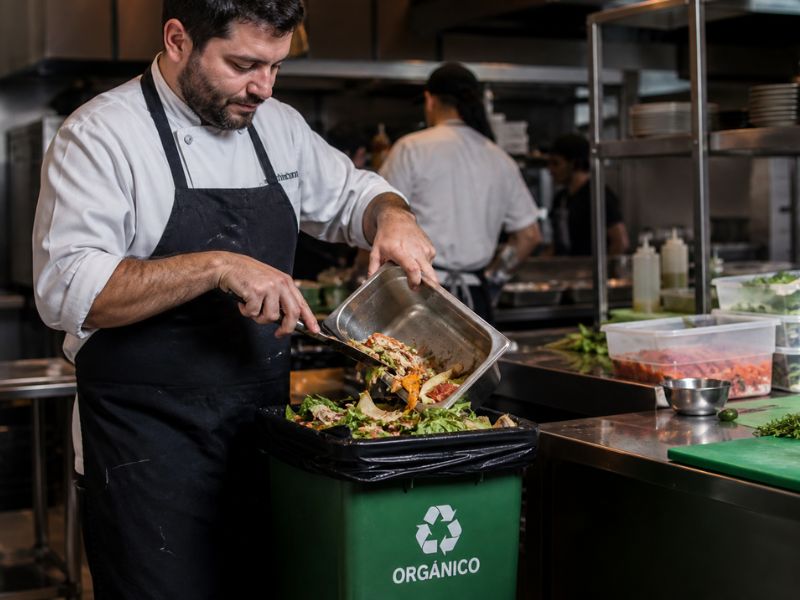
In addition to maintaining a clean, ventilated, and organized storage area, waste management is a crucial part of a restaurant kitchen cleaning and disinfection plan.
To begin with, waste should never accumulate near food or remain in the kitchen for long periods. Proper waste separation and monitoring the condition and cleanliness of bins are also essential.
As part of Araven’s cleaning and organizational solutions for hospitality businesses, we offer waste bins that are key to implementing HACCP cleaning processes in your establishment. Learn more today!
Staff Toilets and Changing Rooms
Did you know that restaurant cleaning and disinfection protocols must also take into account the condition of staff toilets and changing rooms? Although they are not directly involved in food handling, restrooms are high-risk hygiene areas.
For this reason, they must be equipped with hot water, soap, paper towels, waste bins, and appropriate signage.
How to Develop Your Cleaning & Disinfection Plan Step by Step
A Cleaning & Disinfection (C&D) plan for a restaurant kitchen should be clear, practical, and easy for the entire team to follow.
It is not simply about cleaning whenever something appears dirty; rather, it involves establishing a documented system specifying what must be done, when, how, and who is responsible.
It should also be noted that a C&D plan must be adapted to the type of establishment, workload, available equipment, and the specific risks of each area.
The plan should therefore be implemented before, during, and after service, without forgetting deep-cleaning tasks that are carried out weekly or monthly.
It is also important that the plan clearly assigns each task to a specific person, preventing duplication or neglected areas. Furthermore, professional kitchens should only use cleaning products approved for food environments and always follow the manufacturer’s instructions.
Record Keeping and Verification: The Most Common Inspection Failure
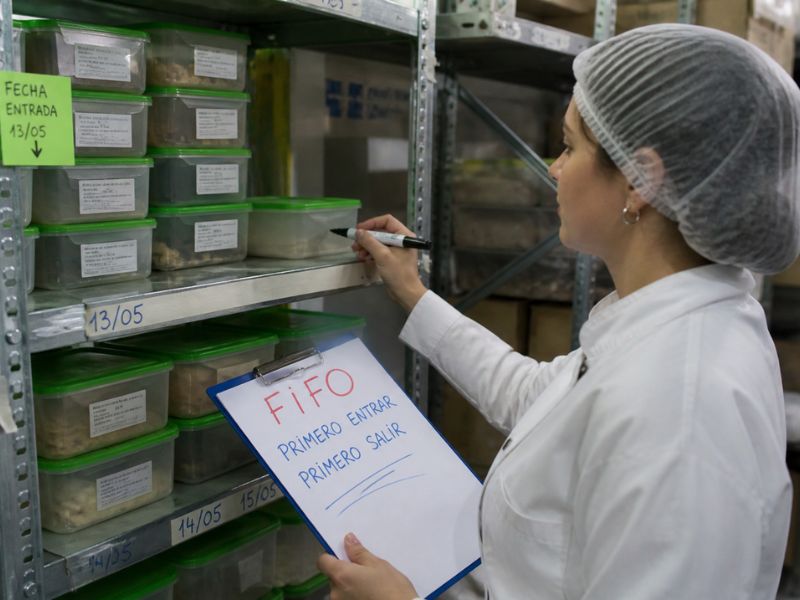
Many kitchens clean and disinfect properly but cannot prove it due to missing or incomplete documentation. In fact, this is currently one of the main causes of non-compliance during health inspections.
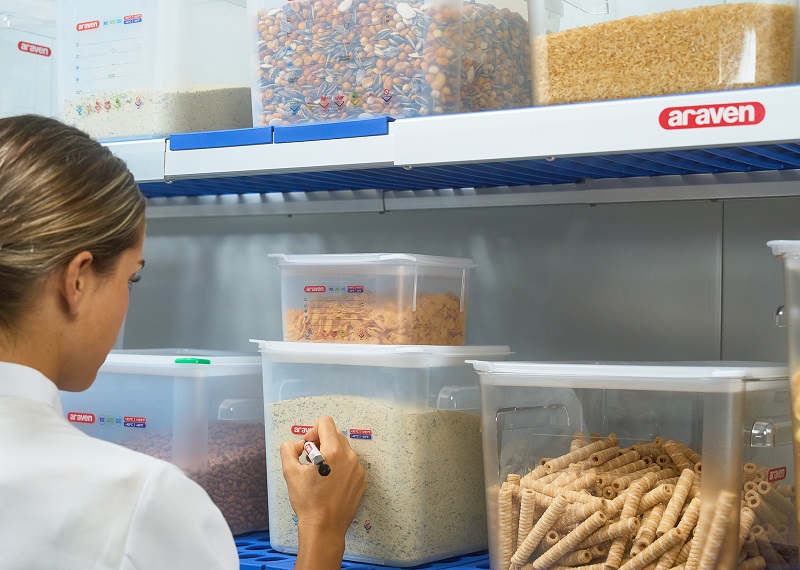
In addition to visual checks, cleaning records are essential in any hospitality business. These records must include dates, times, cleaned areas, products used, the name of the responsible person, and any incidents detected.
As for verification, restaurants rely on internal supervision as well as external audits.
Common Mistakes Detected by Inspectors in 2026
Now that we have reviewed the main points of a restaurant kitchen cleaning plan, here is a quick overview of the most common mistakes identified by health inspectors in hospitality and restaurant businesses:
- Lack of staff training
- Cleaning products without technical data sheets or incorrect labeling
- Lack of documentation
- Records completed using the same handwriting or pen
- Grease accumulation in extraction filters
- Cutting boards that are clean but in poor condition
- Chemicals and food stored together
Discover all Araven solutions today. Because we are always at the forefront of operational efficiency and food safety.