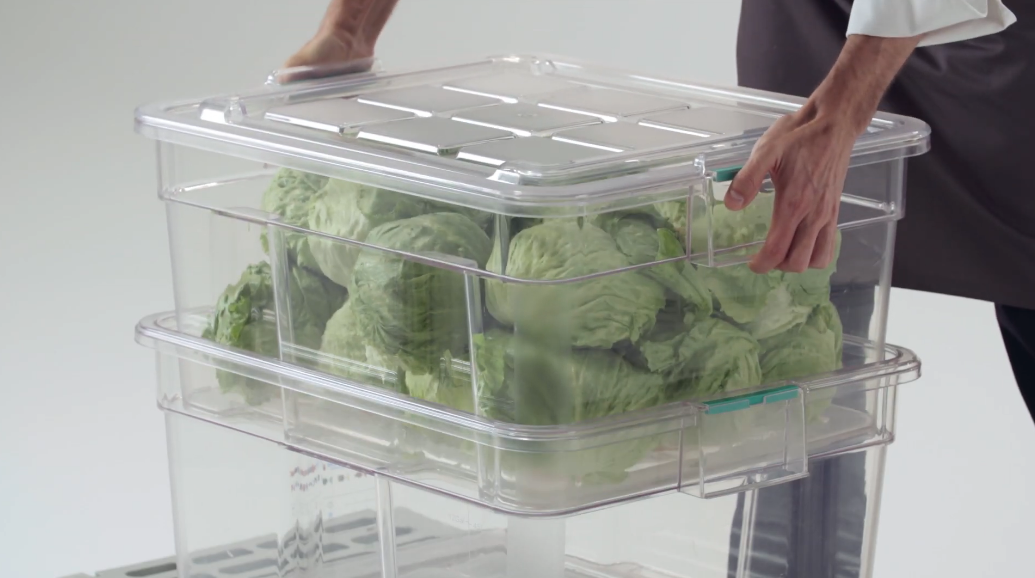
Unlike small establishments and independent restaurants, holiday hotels, industrial caterers and the food industry stock and handle large volumes of food in their kitchens. Handling these larger volumes requires special attention to ensure that food is stored in optimal conditions and to extend its useful life.
Using containers specifically designed to make this work easier and guaranteeing food safety and quality were the main reasons why Araven launched its range of Gastronorm 2/1, large-capacity food containers (70 and 90 litres) . In the following post we take an in-depth look at the technical and functional features of this new range of food containers
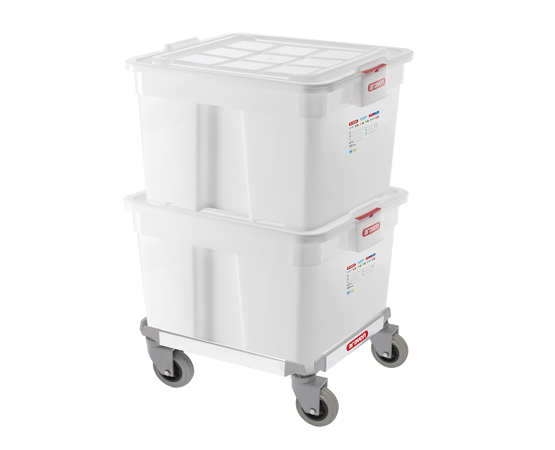
Large-capacity Gastronorm 2/1 Food Pans (70 and 90 L.)
GN 2/1 300 mm high, 70-litre capacity and 380 mm high, 90 litre-capacity food pans are available in two materials: ABS and HDPE (high-density polyethylene). The choice between one material and the other will depend on whether they are going to be used for storing or thawing processes. In the case of thawing processes, we recommend HDPE food pans because they perform better at low temperatures.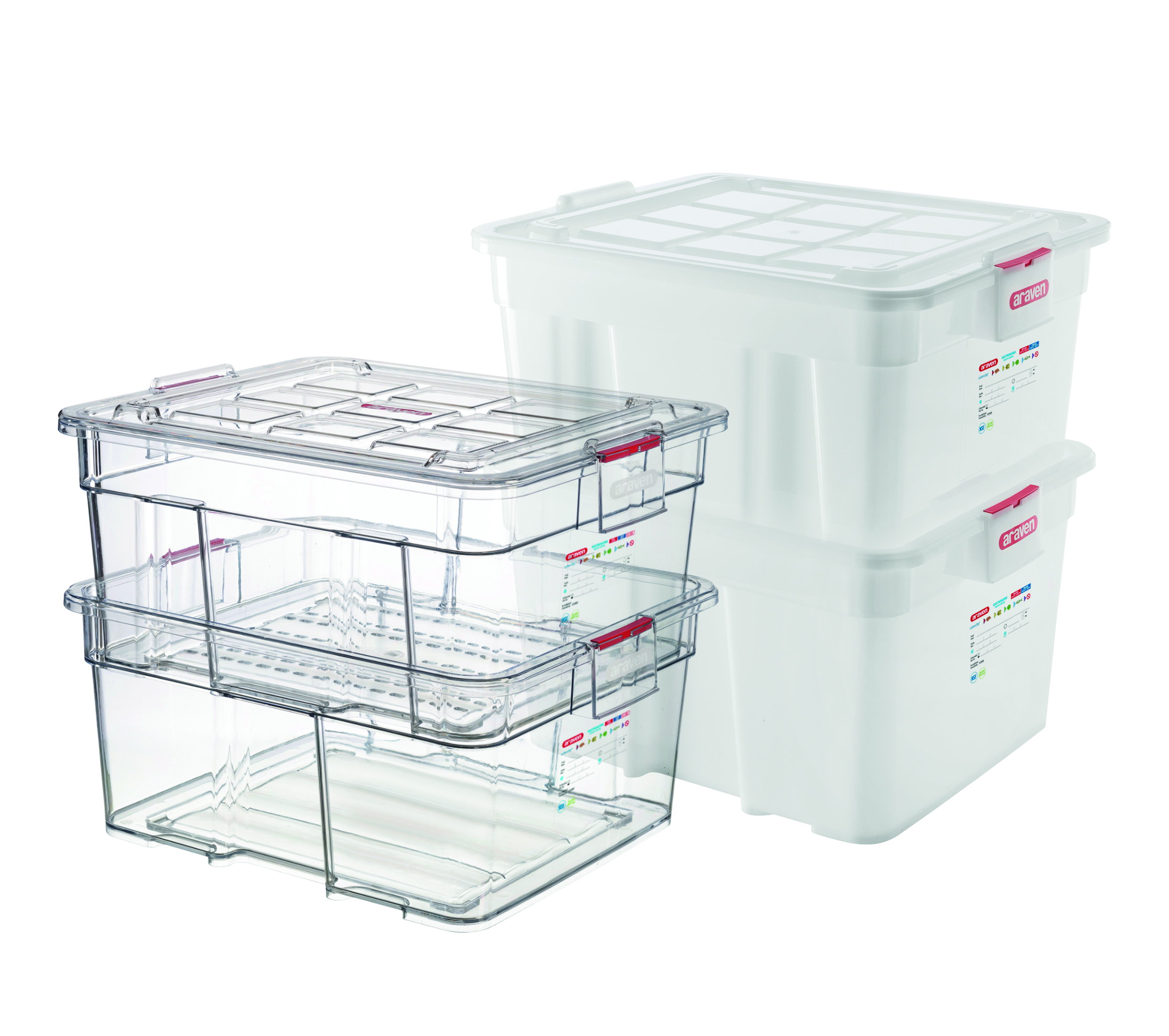
The ABS, bisphenol A-free food pan is a great alternative to polycarbonate as it still has some of the key features, such as its robustness and transparency allowing the contents to be seen without having to open the container.
These food pans can withstand temperatures of between -40 and +90ºC; they are hygienic, and their rounded-edge design is ideal for cleaning, handling, nesting and stacking them.
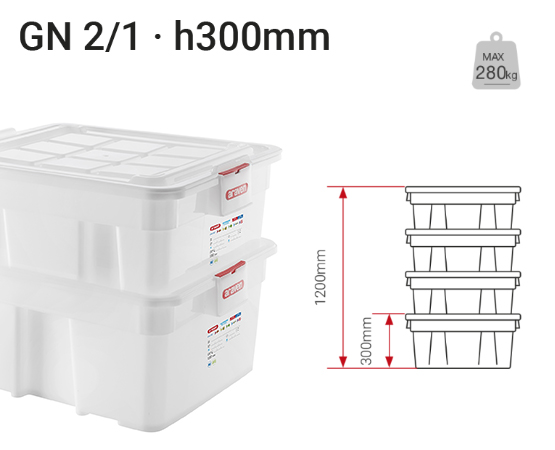
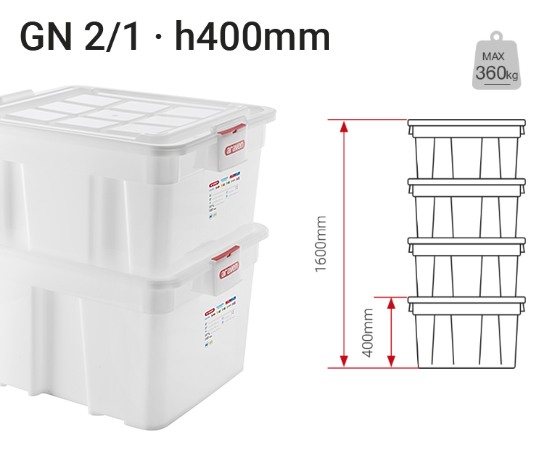
The recommend load according to the food pan model used is:
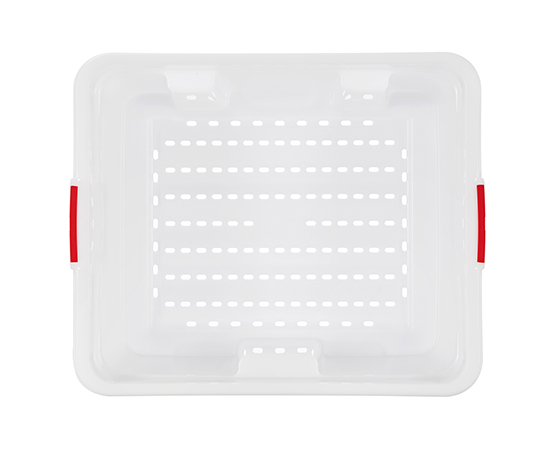
Food pans with a perforated base enhance the thawing process
Perforated food pans, thanks to their ridged base, improve the thawing process as there is less contact area between the container and the food. To guarantee complete food safety and hygiene, smooth-based food pans combine with food pans with a perforated base, to collect the liquid released during thawing so that it does not drip on to other food and contaminate it. This set, specially designed for thawing large amounts of raw materials, also has a lid to prevent any contamination of the food being worked with.
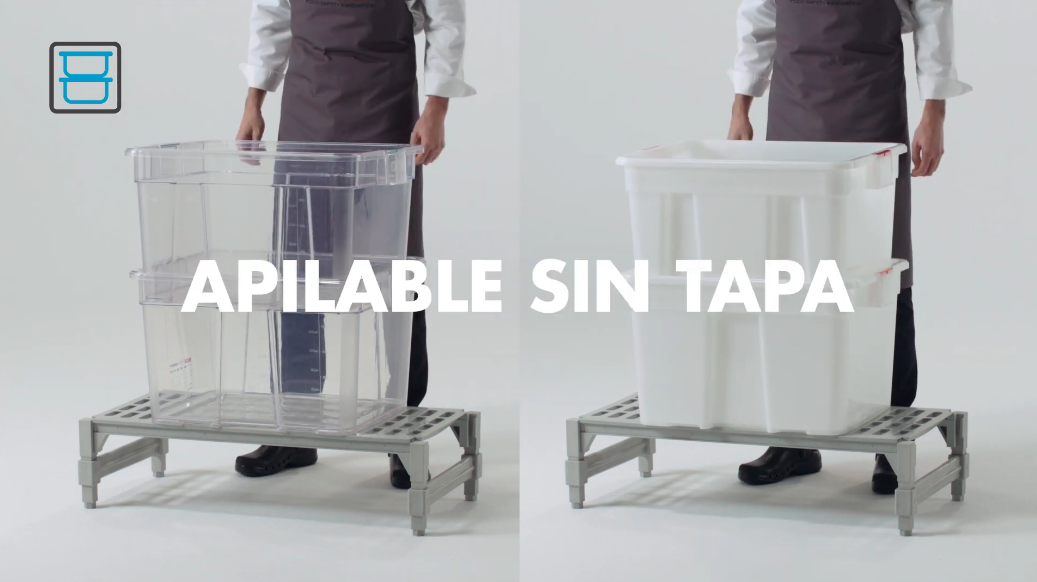
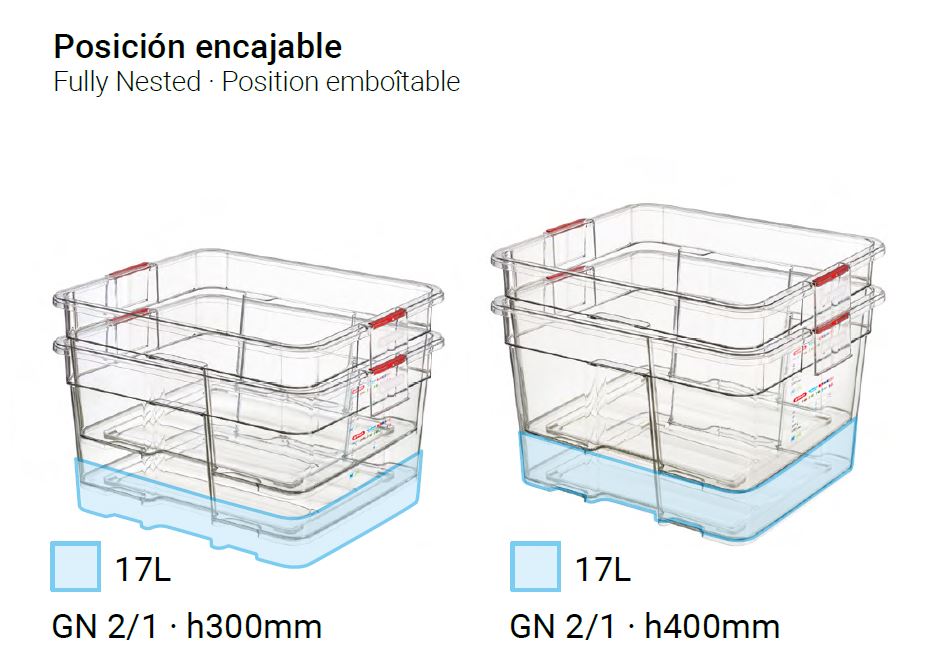
Exclusive design allows food pans to be stacked without lid
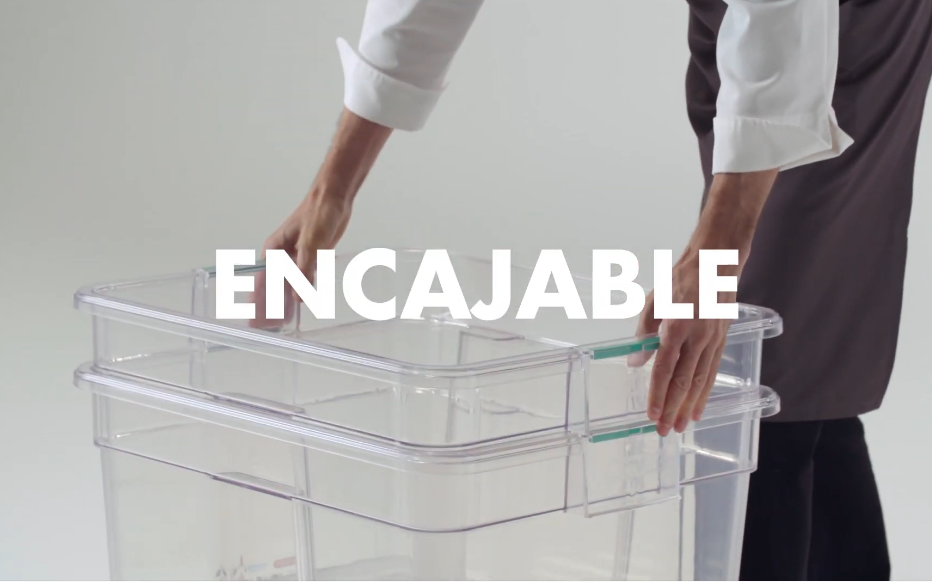
Most food pans on the market are nestable to optimise space when they are not being used. These food pans also have a stackable position without the lid. This means that the bottom food pan has a greater capacity during thawing process which is essential to allow for the amount of exudate released by large volumes of food.
Colour identification and integrated traceability label
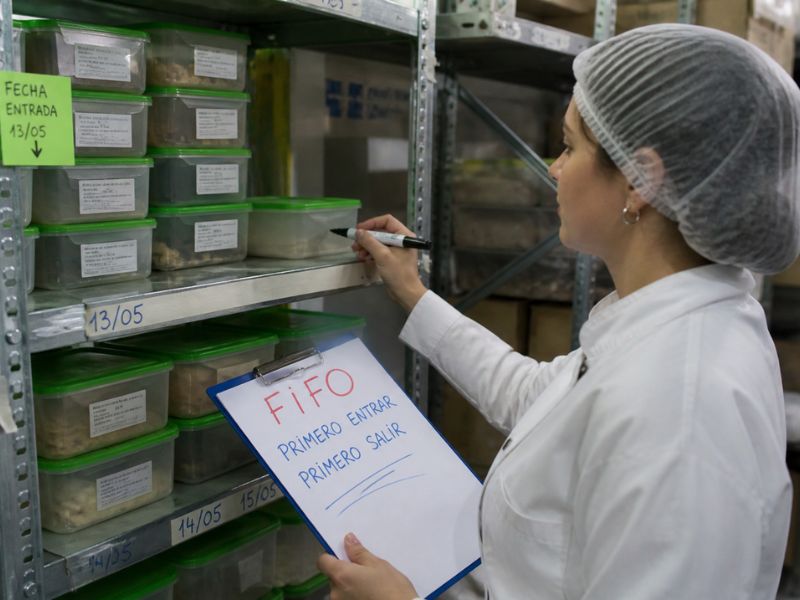
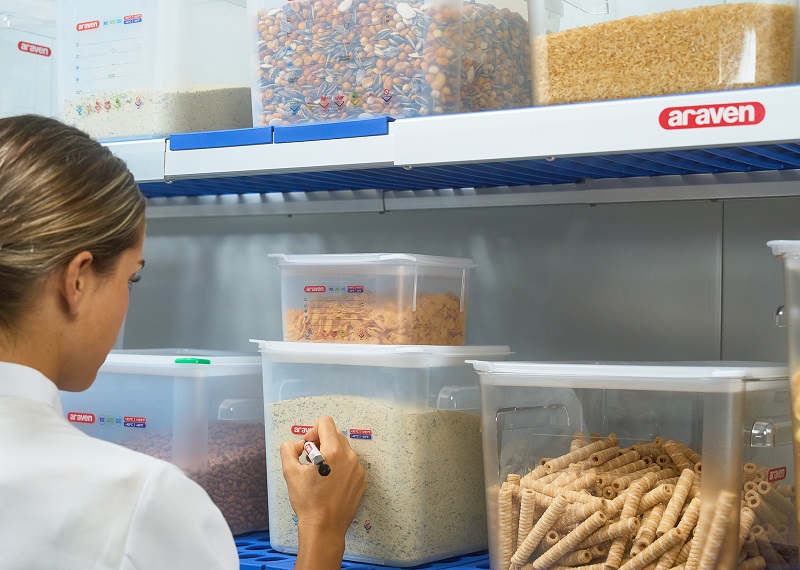
It is very important to be able to identify foods at each stage in the process, to control traceability and guarantee food safety. The containers have a permanent traceability label to record all the basic details of each batch (origin, filling/packaging date) using Araven’s marker pen. This system sees an end to having to stick and tear off paper labels and leaves no marks after washing.
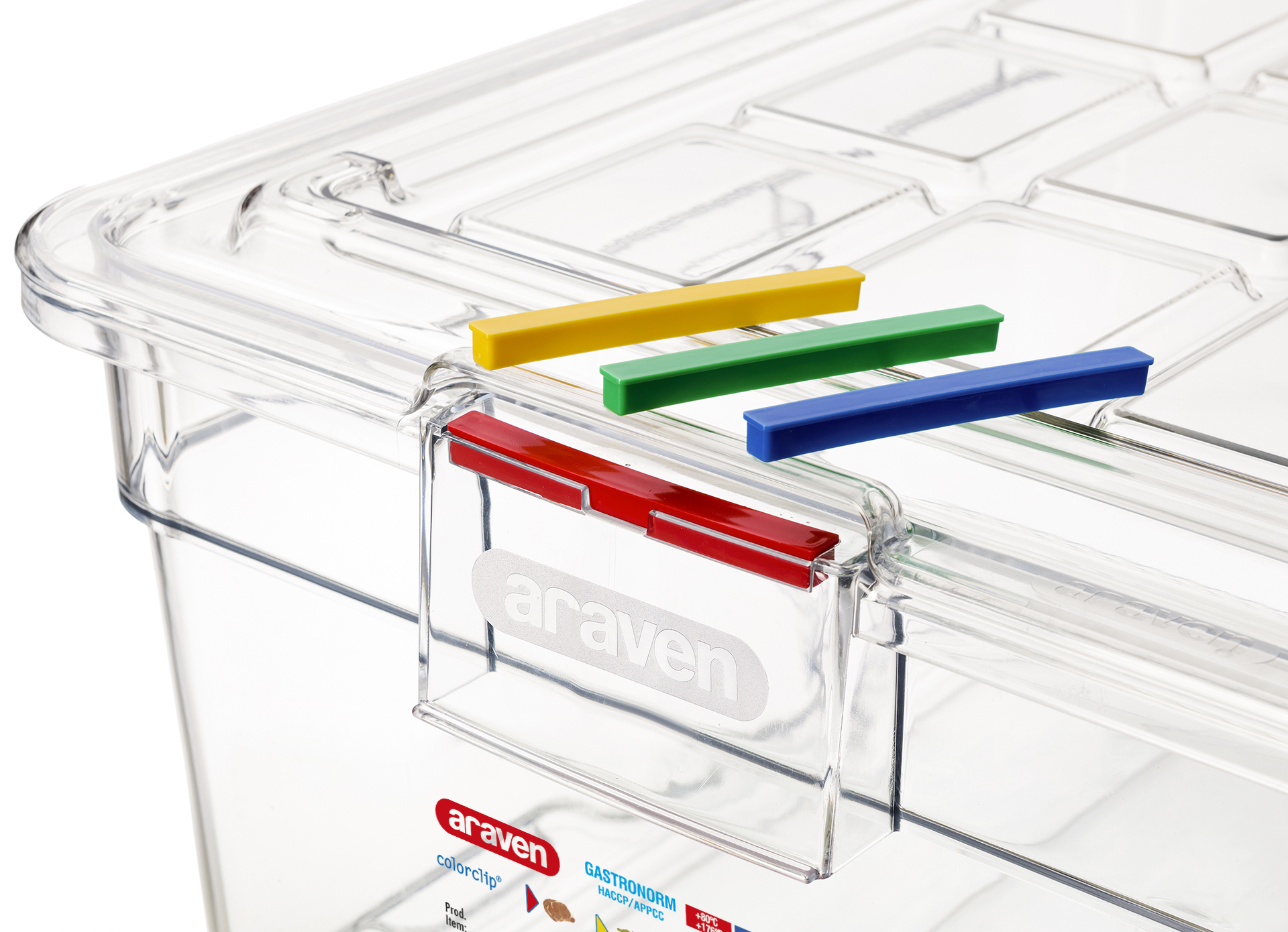
Araven’s ColorClips are an additional feature to identify each container according to the type of food and prevent cross contamination.
– Yellow: white meats
– Red: red meats
– Blue: fish
– Green: vegetables
Wheeled platform to transport GN 2/1 food containers
Moving heavy food containers or isothermal cabinets is not easy and can entail safety hazards if not done correctly. For this reason, we offer this GN 2/1 size wheeled platform to make the transport of these items easier. The platform is made of aluminium and ABS and has 75 mm-diameter rubber wheels. All of this affords it excellent stability and strength, with a maximum recommended load of 200 kg.