Plastic bottles, metal cans, kitchen utensils, containers – until just a few months ago, all of these could contain bisphenol A, also known as BPA. But what is BPA exactly?
BPA is a chemical compound found in epoxy resins – a key material used to coat food and drink cans – and is also added to polycarbonates to increase strength and resistance.
Its use was banned in the European Union under Regulation (EU) 2024/3190, which was adopted last December and published on 20 January this year. Read on to find out more about this new BPA regulation, marking a pivotal change in favour of public and food health and safety.
Europe’s new BPA regulation
While Europe had already enforced Commission Regulation (EU) No 10/2011 of 14 January 2011 on plastic materials and articles intended to come into contact with food, this new legislation goes further, imposing a total ban on bisphenol A in food-contact materials as of 20 January 2025, based on updated findings by the European Food Safety Authority (EFSA). The EU’s press release announcing the ban stated:
“From 20 January 2025, Commission Regulation (EU) 2024/3190 bans the use and trade of bisphenol A (BPA), its salts and other hazardous bisphenols and hazardous bisphenol derivatives in food contact materials across the EU.”
But what does all this mean? Put simply, BPA can no longer be used in packaging, can linings, plastic bottles, coolers or utensils within the hospitality sector. This outright ban follows similar regulations introduced in 2011 aimed at restricting BPA use in the manufacture of baby bottles.
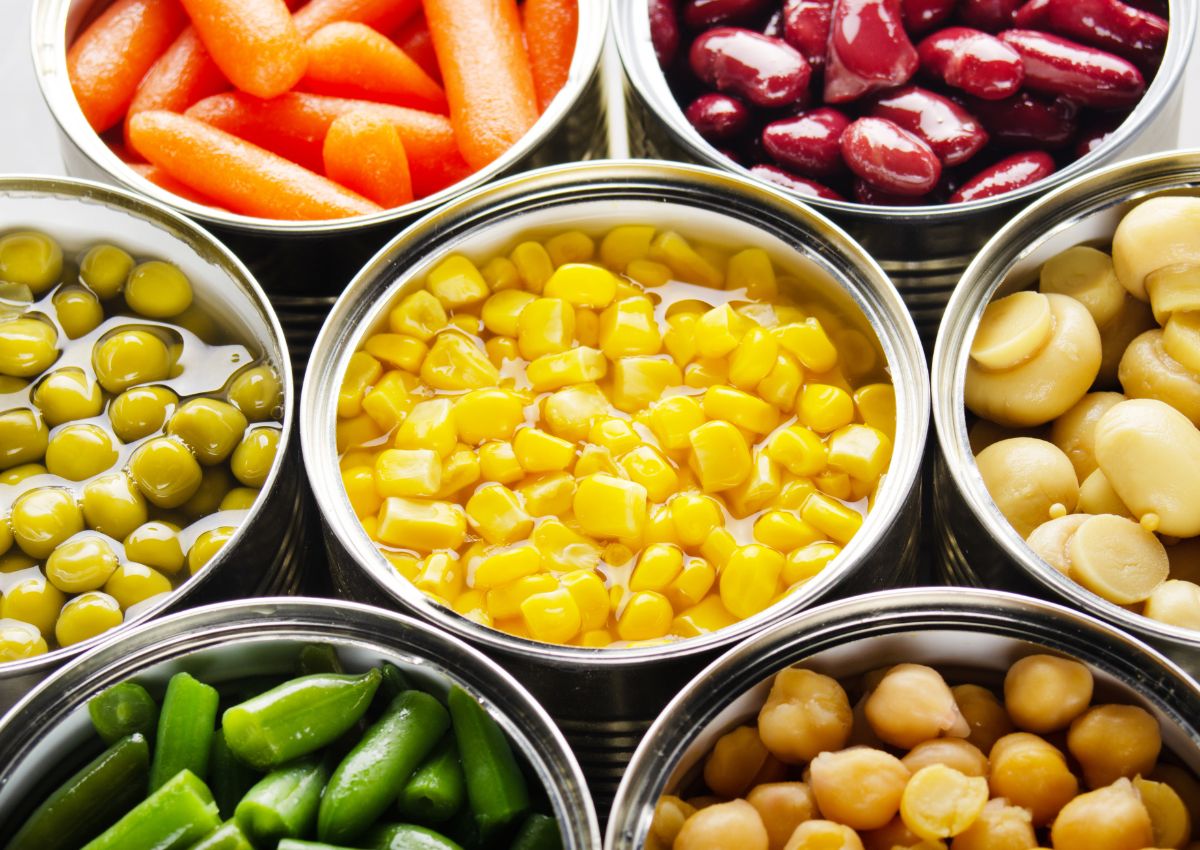
However, BPA isn’t limited to plastic products – it’s also found in a wide range of materials, including varnishes, adhesives, rubber, silicone, inks and resins.
This ban also extends to BPA derivatives: all bisphenols and their derivatives must ensure that their final form contains no more than 1 μg/kg of BPA.
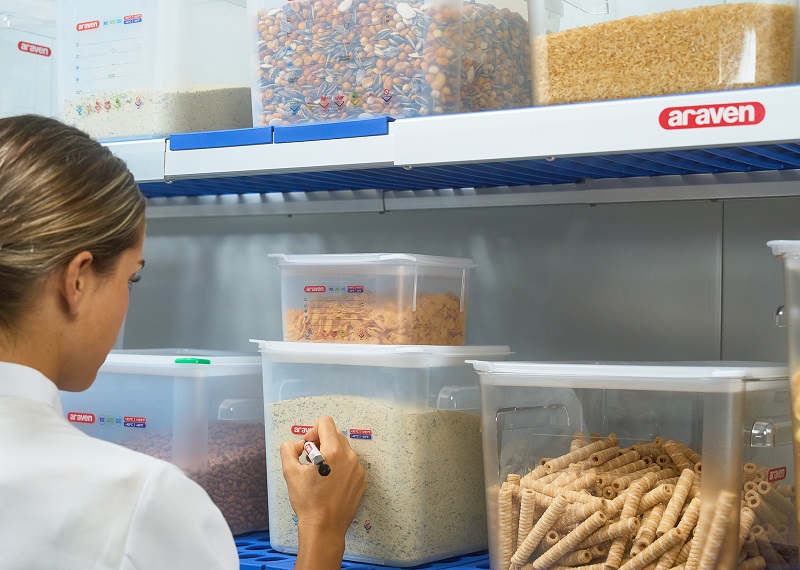
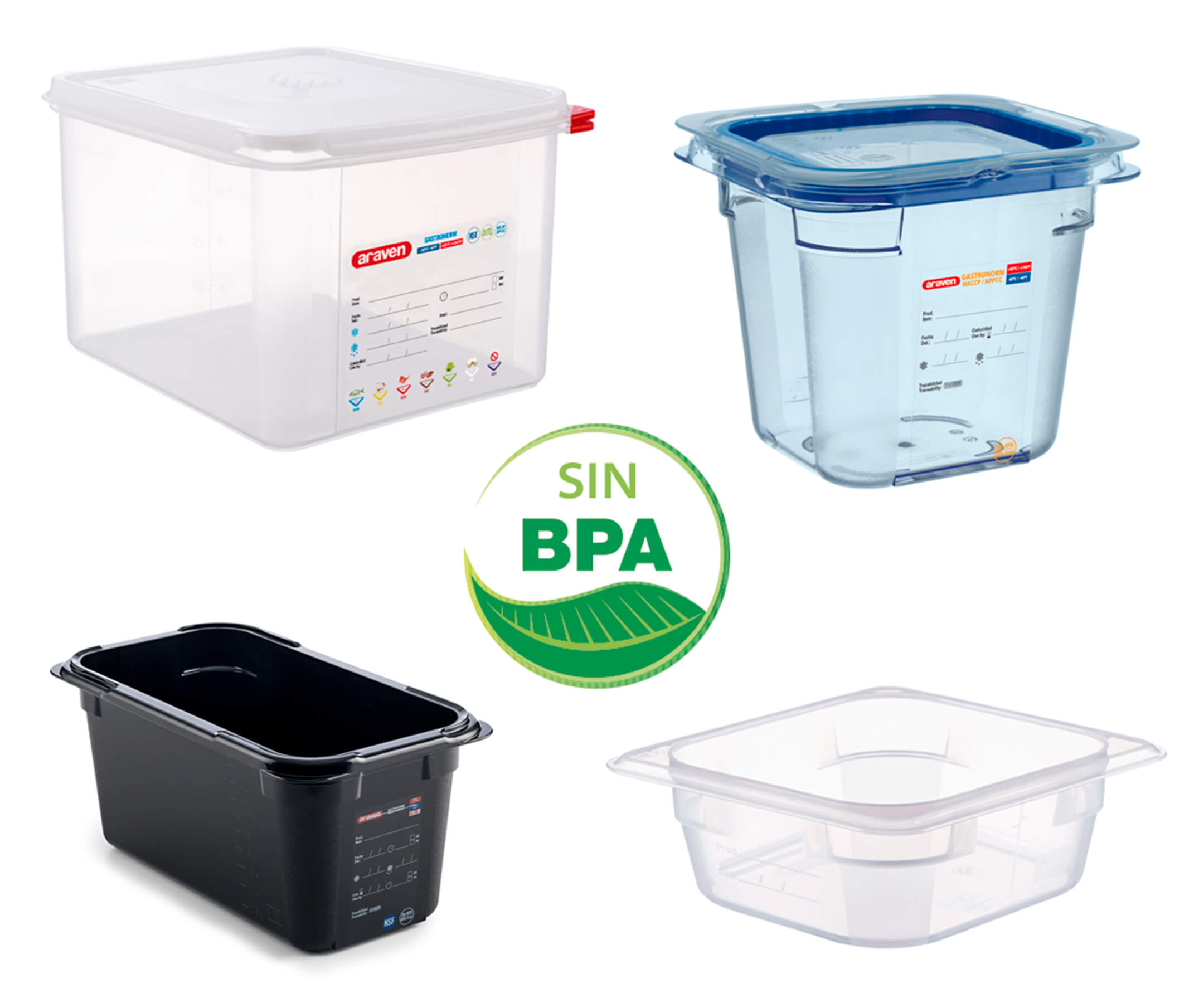
Are you looking for products that don’t transfer bisphenol A to food? Do you run a hospitality business? At Araven, we strictly adhere to all European BPA regulations. Our products – such as our BPA-free Gastronorm airtight containers – have been crafted without BPA for years.
The end of bisphenol A and its impact on the food industry
There’s no question that this new BPA regulation marks a turning point for the sector, introducing fresh challenges in product manufacturing. It represents a fundamental shift – a transition towards greener, more innovative processes.
As a result, companies are racing to create alternative packaging solutions that are both high quality and sustainable. Araven has remained ahead of the curve, having long embraced the use of BPA-free alternative materials.
Innovation is at the heart of our value proposition. At Araven, we understand that staying ahead requires developing cutting-edge ideas to ensure our products keep evolving. Sustainability and excellence are the foundations of everything we do. Do you want to know more?
Araven, experts in safe, BPA-free solutions
Trust the real experts. At Araven, our catalogue already features several ranges of reusable containers made from BPA-free polycarbonate alternatives, such as:
- High-quality ABS
- Food-safe polypropylene
Both of these materials are BPA-free and combine outstanding durability with excellent mechanical and thermal properties, making them the ideal choice for professional kitchens.
Not only do we comply with the EU’s new BPA regulation, but we also develop innovative products that deliver reliability in food storage, operational performance and compliance.
Find out what we can do for you. Choose Araven, your trusted partner for all your hospitality and restaurant needs.